
Technology
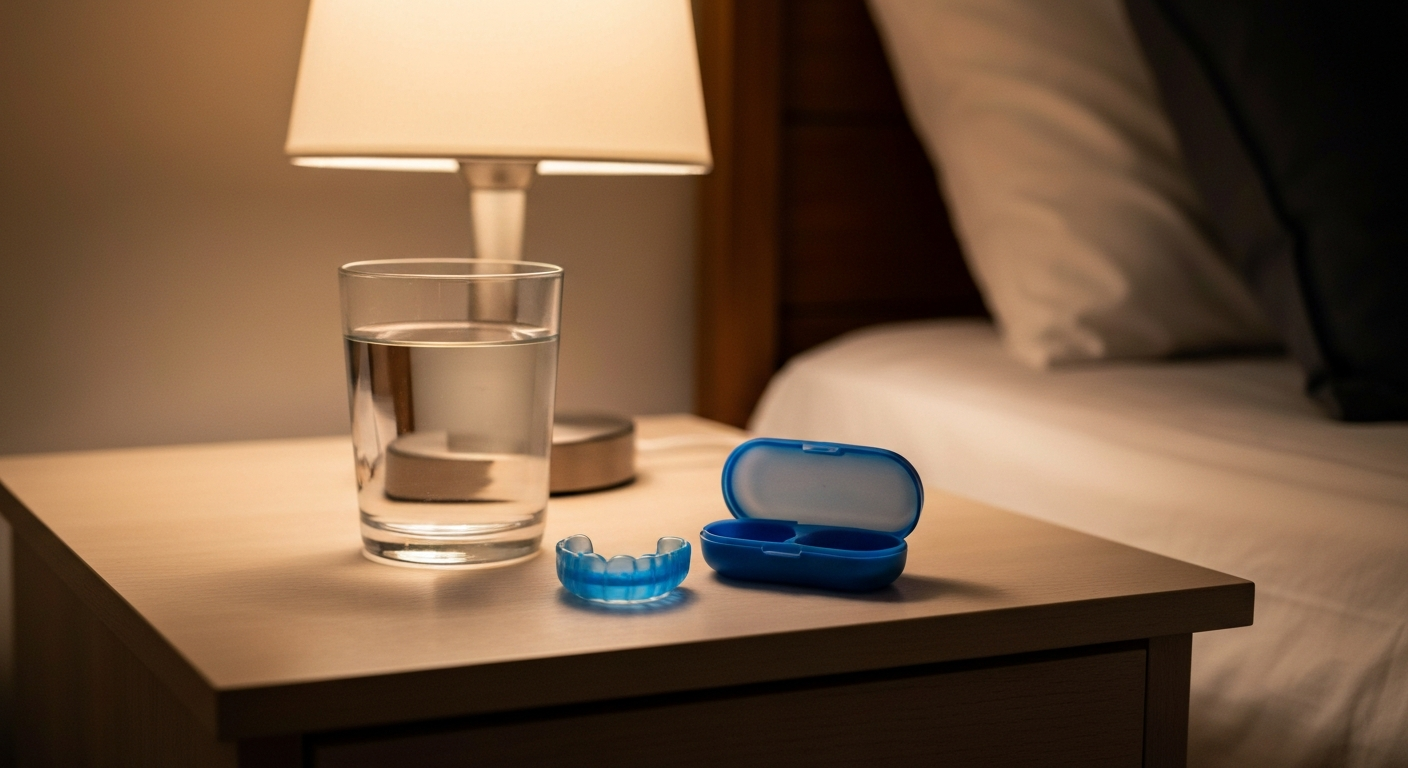

SnoreRx is a mandibular advancement device (MAD) — a boil-and-bite mouthpiece that nudges your lower jaw forward to open your airway and stop snoring at the source.
If you searched "snor rx," you're probably looking for the actual product, what it does, or whether it's worth the money. Here's the short answer: SnoreRx is one of the better-known over-the-counter anti-snoring mouthpieces on the market in 2026, and it's built on a mechanism that's well-documented in sleep medicine — but it isn't the only mouthpiece that uses it, and it isn't right for everyone.
SnoreRx is a calibrated mandibular advancement device that you boil, bite, and adjust in small increments until your snoring stops. It belongs to a category of devices designed to hold your lower jaw slightly forward while you sleep, which keeps soft tissue at the back of your throat from collapsing and vibrating.
"Moving the tongue and lower jaw forward can help open the airway and reduce snoring." — Lauren Fountain at Sleep Foundation
The device adjusts in 1-millimeter increments, with most users starting at the factory setting and moving forward by a millimeter every two to three nights until snoring stops or the fit feels uncomfortable.
To fit one of these devices, you typically soften the plastic in boiled water, bite down to take an impression of your teeth, and let it set in cold water — a process common to most "boil-and-bite" mouthpieces, not just this one brand.
Mandibular advancement devices are one of the most evidence-backed non-surgical snoring fixes available, but they work best for mild to moderate, tongue-and-jaw-related snoring — not every cause of snoring.
Snoring happens when air pushes past relaxed tissue in your throat and makes it vibrate. As the Cleveland Clinic explains:
"When you breathe, you push air through your nose, mouth and throat. A blockage in your airway can cause these tissues to vibrate against each other as air passes through." — Cleveland Clinic
Jaw-advancement mouthpieces target exactly that mechanism by widening the space behind your tongue. They tend to work less well if your snoring is driven by chronic nasal congestion, a deviated septum, or significant weight gain around the neck — in those cases, the jaw isn't the bottleneck, so moving it forward won't help much.
| ✓Our Pick |
Custom-fit mouthpiece that repositions your jaw to eliminate snoring A well-reviewed choice that delivers real results — worth every penny for anyone dealing with this. Learn More → |
If you'd rather skip the boil-and-bite fitting process, lab-made custom devices like SnoreMeds use a similar jaw-repositioning principle but are molded from your own dental impression for a more precise fit.
| Factor | What Users Typically Report |
|---|---|
| Break-in period | 3–7 nights of mild jaw or tooth soreness while adjusting |
| Ideal candidate | Mild-to-moderate snorers, back- or side-sleepers |
| Less effective for | Nasal congestion, severe obstructive sleep apnea |
| Maintenance | Rinse nightly; replace every 6–12 months |
| Cost vs. custom lab devices | Lower upfront cost, less precise fit |
Most boil-and-bite advancement devices carry a temporary adjustment period. Expect mild jaw tension for the first few nights as your muscles adapt to the new resting position — this is normal and usually fades within a week.
See What Solves This in Minutes: Browse anti-snoring mouthpieces and jaw devices
If your snoring is loud, accompanied by gasping or pauses in breathing, or you're tired despite a full night's sleep, a mouthpiece alone may be masking a more serious problem — talk to a doctor about sleep apnea before relying on an over-the-counter device.
A mandibular device can quiet simple snoring, but it isn't a substitute for diagnosis. If you snore heavily and also stop breathing periodically at night, that's a pattern worth getting checked rather than just muffled.
Also Read: What Actually Helps Snoring: Evidence-Ranked Guide 2026
Most boil-and-bite mandibular advancement devices share the same core mechanism, so the real differences between brands come down to adjustability precision, material durability, and how easy the device is to clean and maintain.
Some devices adjust in larger 2-millimeter increments, which is faster to fit but less precise than a 1-millimeter system — precision matters because the difference between "not quite enough advancement" and "too much, causing jaw soreness" is often just a millimeter or two. Devices also vary in how much they restrict mouth breathing; a design with small airflow vents can be more comfortable for people who breathe through their mouth at night, though it may transmit slightly more sound than a fully sealed design.
Material quality affects both comfort and lifespan. Medical-grade copolymer holds its shape through repeated reheating and remolding better than cheaper thermoplastics, which matters if you need to refit the device as your bite settles in over the first few weeks. Cleaning ease is also worth considering: devices with simple, smooth surfaces are easier to rinse thoroughly each morning than ones with intricate hinges or multiple moving parts, which can trap bacteria if not cleaned carefully.
Boil-and-bite mandibular devices typically cost a fraction of what a dentist-fitted custom oral appliance runs, which is the main reason people try one before pursuing a prescription option.
A custom, lab-made oral appliance fitted by a dentist for sleep-related snoring or mild apnea can run several hundred to over a thousand dollars, and insurance coverage for it usually requires a documented sleep apnea diagnosis first. Over-the-counter boil-and-bite devices skip that process entirely, which is convenient but also means you're self-diagnosing the cause of your snoring rather than having it confirmed by a sleep study. For straightforward, mild snoring without other red-flag symptoms, that trade-off is often reasonable. For anyone with loud, frequent snoring and signs of disrupted breathing, the lower upfront cost of an over-the-counter device shouldn't substitute for getting evaluated.
SnoreRx is a calibrated, boil-and-bite mandibular advancement device that moves your lower jaw forward to stop tissue at the back of your throat from vibrating. It's a reasonable, evidence-backed option for mild-to-moderate snoring caused by jaw or tongue position, with a short adjustment period and a relatively low cost. It's less effective for congestion-driven snoring or significant sleep apnea, where a custom-fit device or a medical evaluation is the better next step.
Most users report mild jaw or tooth soreness for the first several nights as they adjust the device forward in small increments. Comfort typically improves once you find your effective setting, usually within one to two weeks.
Boil-and-bite mandibular devices generally need replacing every six to twelve months as the plastic wears, loses its fit, or accumulates bacteria despite regular rinsing.
Most boil-and-bite devices can be reheated and remolded a limited number of times, but each refit slightly degrades the plastic. Check the manufacturer's instructions for how many refits are recommended before replacement.
It may reduce snoring noise, but mandibular advancement devices are not a verified treatment for moderate-to-severe obstructive sleep apnea on their own. Talk to a sleep specialist for a proper diagnosis and treatment plan if apnea is suspected.
Reviewed and Updated on June 21, 2026 by George Wright