Sleep


Yes, snoring does cause sore throat — directly and through a clear biological mechanism. The vibration of pharyngeal tissue during snoring physically damages the throat lining over the course of a night, while simultaneous mouth breathing strips protective moisture from the same tissue. Done chronically, this repeated nightly stress causes more than temporary irritation: long-term snorers develop measurable structural changes in their pharyngeal tissue.
The connection between snoring and throat pain isn't incidental — it's mechanistically well-established in the sleep medicine literature.
Snoring is produced when air is forced through a partially narrowed upper airway, causing the surrounding soft tissue — primarily the soft palate, uvula, and posterior pharyngeal walls — to vibrate. These vibrations occur at 40–60 Hz, sustained over the entire duration of sleep. The biological consequences of this sustained vibration are:
Mechanical micro-trauma. The repeated oscillation of the pharyngeal mucosa against itself causes micro-abrasion — small-scale damage to the epithelial cell layer. This triggers a local inflammatory response, with release of cytokines and recruitment of immune cells to the affected tissue. The inflammation produces the sensation of soreness and, in chronic snorers, leads to tissue remodeling.
Mucosal dehydration. Snoring almost invariably involves partial or complete mouth breathing, which bypasses nasal humidification. The nose delivers air to the pharynx at ~95% relative humidity; the open mouth delivers air at whatever ambient humidity exists (30–50% in most indoor environments). Over 7–8 hours of sleep, this produces significant mucosal dehydration — the protective mucus layer thins, the epithelium dries, and sensitivity to the simultaneous mechanical vibration increases.
Reduced mucociliary clearance. The pharyngeal mucosa contains cilia — tiny hair-like projections that sweep mucus and debris away from the throat. Research shows that chronic snoring reduces the function of these cilia, impairing the throat's normal self-cleaning mechanism. This leaves the tissue more vulnerable to irritation and infection.
"Habitual snorers demonstrate significantly impaired mucociliary clearance, increased mucosal inflammation, and structural changes in the pharyngeal epithelium compared to non-snorers. These changes are consistent with mechanical trauma from sustained vibration and are dose-dependent on snoring severity." — Sleep and Breathing, Springer Nature
Most people notice the acute effect — morning sore throat — but don't realize that chronic snoring produces lasting changes.
Acute effect (each night): Tissue vibration and drying produce inflammation, which peaks on waking as morning soreness or scratchiness. This resolves over 30–90 minutes as normal swallowing and saliva production rehydrate and soothe the mucosa. No lasting damage from any single night of snoring.
Chronic effect (months to years of habitual snoring): Repeated nightly inflammation eventually produces:
- Tissue thickening and fibrosis in the soft palate — the same way repeated mechanical stress produces calluses
- Reduced pharyngeal sensitivity (the nerve endings in the throat become less sensitive as the tissue remodels — a protective mechanism that also impairs the normal airway reflex)
- Progressive soft palate elongation — the soft palate can actually lengthen over years of snoring, worsening the obstruction and creating a feedback loop
- Increased risk of obstructive sleep apnea development — the structural changes that snoring causes are the same structural changes associated with OSA progression
This is why long-term heavy snorers are more likely to develop sleep apnea over time, even if they didn't start with it.
Obstructive sleep apnea (OSA) produces the same sore throat symptoms as snoring, but through more severe mechanisms.
In snoring, the airway narrows but doesn't close — there's continuous airflow. In OSA, the airway closes completely during apneic events, and the person must partially wake to reopen it. During these closure events, the suction forces on the pharyngeal walls are dramatically greater than in regular snoring — the muscles struggle to re-open the airway against complete obstruction.
This produces more severe pharyngeal trauma, and OSA-associated sore throats may be worse and more persistent than simple snoring sore throats. Additionally, OSA causes oxygen desaturation during each apnea, which affects all tissues including the throat.
Signs that sore throat alongside snoring may reflect OSA rather than simple snoring:
- A partner reports observed breathing pauses or gasping during your sleep
- Sore throat is accompanied by morning headaches
- Severe daytime sleepiness despite adequate sleep time
- Waking up feeling unrefreshed regardless of hours slept
- Memory or concentration problems
Also Read: Why Is My Throat Tight? 9 Causes & When to Worry
No — but the probability increases with snoring severity, duration, and ambient air conditions.
Factors that determine whether a person's snoring produces a sore throat:
| Factor | Effect on Sore Throat Risk |
|---|---|
| Snoring intensity (loudness) | Higher intensity = greater vibration amplitude = more tissue trauma |
| Proportion of night spent snoring | More hours = more cumulative damage |
| Bedroom humidity | Lower humidity accelerates mucosal drying |
| Mouth vs. nose breathing | More mouth breathing = more dry-air exposure |
| Alcohol consumption before bed | Worsens snoring and dehydrates the throat independently |
| Individual mucosal sensitivity | Varies; some people tolerate more trauma before symptoms appear |
Light, occasional snorers who mostly breathe through the nose may have no morning sore throat at all. Heavy nightly snorers who open-mouth breathe in a dry bedroom almost always do.
| ✓Our Pick |
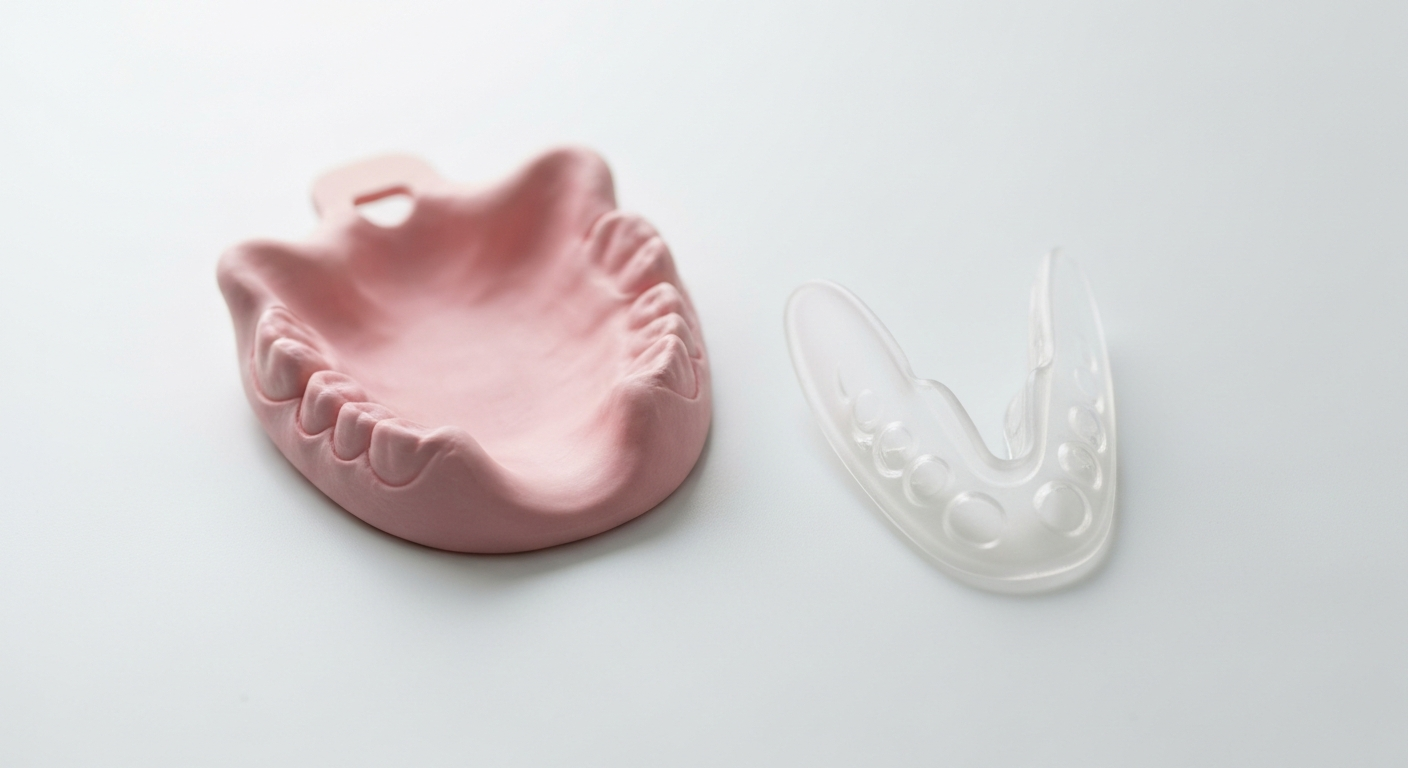
SnoreMeds anti-snoring mouthpiece — reduces the vibration that causes chronic throat damage Used by over 10,000 satisfied customers — an easy, affordable option you can start using today. Learn More → |
Every treatment that reduces snoring also reduces the sore throat — they share the same cause.
Mandibular advancement devices address the primary mechanism by widening the airway, which reduces airflow velocity and vibration amplitude. A well-fitted MAD doesn't just reduce snoring sound — it reduces the physical force of tissue vibration, which is what produces the throat damage. This is why MAD users typically report resolution of morning sore throat within 1–2 weeks: the biological insult to the throat decreases proportionally.
Supporting treatments for the drying component:
- Bedroom humidifier (45–50% RH target)
- Pre-bed hydration and nasal clearing
- Nasal obstruction treatment (redirects airflow through the humidifying nose)
For OSA-level snoring, CPAP eliminates the apneas and dramatically reduces pharyngeal trauma. MADs are an approved alternative for mild-to-moderate OSA.
Yes, snoring directly causes sore throat — through vibration-induced micro-trauma to the pharyngeal mucosa and overnight mucosal dehydration from mouth breathing. Acute effects produce morning soreness that resolves through the day; chronic effects produce structural tissue changes and may progress to OSA. The severity of sore throat correlates with snoring intensity, mouth breathing proportion, bedroom humidity, and alcohol use. Treating the snoring eliminates the cause: mandibular advancement devices and bedroom humidification are the primary interventions.
The distinctive pattern: worst immediately on waking, improving reliably over 30–90 minutes as you drink fluids, better on mornings after nights when you slept on your side or didn't snore heavily, and never accompanied by fever or progressive worsening through the day. If your sore throat worsens through the day or comes with fever, it's not from snoring alone.
Chronic heavy snoring can cause lasting structural changes in pharyngeal tissue — thickening, fibrosis, and reduced mucosal sensitivity. These changes are reversible early in their course if snoring is treated, but may become permanent after years of progression. This is one of the reasons treating snoring sooner rather than later has value beyond just comfort.
No. Light or positional snorers (who snore only on their back) with good nasal breathing and a humidified bedroom may have no symptoms. Sore throat from snoring is most common in heavy snorers who mouth-breathe, sleep on their back, and have dry bedroom air — typically the combination of three or more intensifying factors.
Yes — meaningfully. A bedroom humidifier set to 45–50% RH raises the moisture of the air reaching your throat even through mouth breathing, directly reducing the drying mechanism. It doesn't stop the vibration damage, but it reduces one of the two major contributing mechanisms. Studies on snorers consistently show reduced subjective throat complaints with appropriate bedroom humidification.
Reviewed and Updated on June 13, 2026 by George Wright