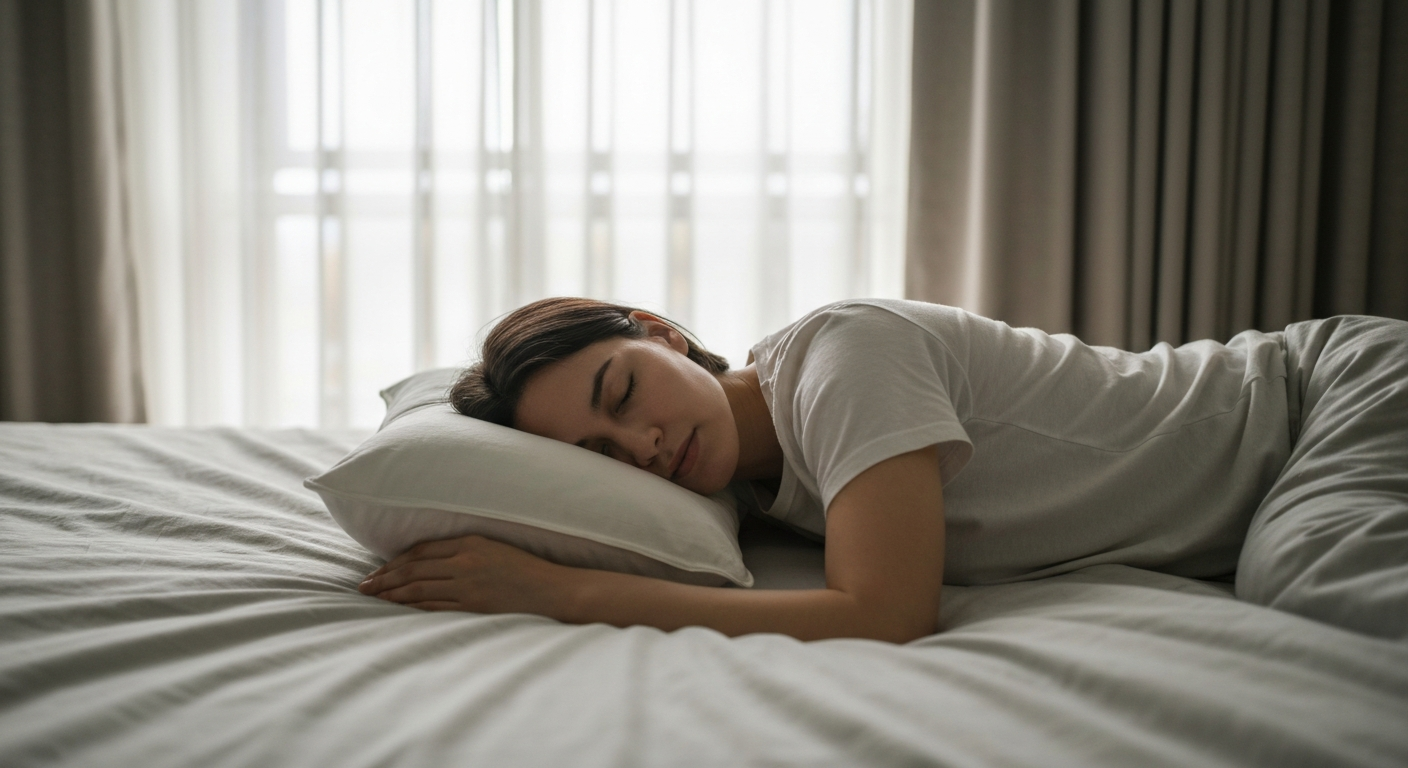
Yes, snoring can absolutely come from the nose alone — it usually sounds like a whistle or high-pitched hiss rather than the deeper rattle of throat snoring, and it's caused by air squeezing through a narrowed or partially blocked nasal passage. Nasal snoring and throat snoring can happen separately or together, and telling them apart matters because the fixes are different.
How Nose-Only Snoring Actually Works
Nasal snoring happens when air is forced through a narrowed nostril or nasal passage, causing soft tissue inside the nose to vibrate the same way throat tissue does. Common culprits include a deviated septum, swollen nasal turbinates from allergies or a cold, nasal polyps, or simply a naturally narrow nasal valve (the area just inside the nostrils where airflow is already tightest).
"Snoring in and of itself is caused by vibration of the tissues in the back of the throat." — Dr. Virginia Skiba, Neurologist and Sleep Medicine Physician at Henry Ford Medical Center, via the American Medical Association
The same vibration principle applies further forward in the airway too — nasal tissue flutters under fast-moving air exactly like throat tissue does, just with a higher-pitched result because the passage is narrower.
Nasal Snoring vs. Throat Snoring: How to Tell the Difference
The sound is usually the biggest clue. Nasal snoring tends to be a thinner, whistling, or hissing sound, often most noticeable when lying on your back with a stuffy nose. Throat snoring is deeper and rattling, coming from the soft palate and tissue further back. Allergy season, a cold, or chronic nasal congestion will spike nasal snoring specifically, while alcohol and back-sleeping affect throat snoring more directly.
"Allergic rhinitis occurs when you inhale something that you're allergic to, like pet dander or pollen, and then the inside lining of your nose becomes inflamed, resulting in congestion, runny nose, sneezing or itching." — Sandra Y. Lin, MD, Guideline Author, American Academy of Otolaryngology–Head and Neck Surgery Foundation
That inflammation is exactly what narrows the nasal passage enough to start a whistle. Treating the underlying congestion, not just the symptom, is usually what actually quiets it down.
Also Read: Snoring Due to Allergies: Causes, Triggers & 6 Fixes
What Helps Nose-Specific Snoring
Nasal strips that physically widen the nostrils, saline rinses to clear congestion, and treating underlying allergies all target nasal snoring directly in a way that throat-focused fixes (like positional therapy) don't. If a deviated septum or chronically narrow nasal valve is the root cause, an ENT can evaluate whether a structural fix would help more than at-home options.
| ✓Our Pick |
Custom-fit mouthpiece that repositions your jaw to stop snoring Save yourself the frustration — a proven solution with consistently positive feedback from real buyers. Learn More → |
In Short
Snoring through the nose is real and distinct from throat snoring — it's typically a higher-pitched whistle caused by air forcing through a narrowed nasal passage, often from congestion, allergies, or a deviated septum. Nasal strips, saline rinses, and allergy treatment target it directly, while a persistent whistle that doesn't respond to those steps is worth an ENT evaluation to check for structural causes.
What You Also May Want To Know
Why does my nose whistle when I snore?
A whistling sound usually means air is squeezing through an especially narrow point in the nasal passage, often from swollen tissue, a deviated septum, or a naturally narrow nasal valve.
Do nasal strips actually work for nose-only snoring?
Yes, nasal strips that physically widen the nostrils tend to work well specifically for nasal snoring, since they directly counteract the narrowing that causes the whistle.
Can a cold cause nose-only snoring even if I don't normally snore?
Yes. Nasal congestion from a cold temporarily narrows the airway enough to cause snoring in people who otherwise don't, and it typically resolves once the congestion clears.
Is nasal snoring less serious than throat snoring?
Not necessarily — while nasal snoring is rarely linked to sleep apnea on its own, chronic nasal obstruction can still affect sleep quality and is worth addressing, especially if it's persistent rather than tied to a temporary cold or allergy flare.
Can I have both nasal and throat snoring at the same time?
Yes, and it's common. A blocked nose often forces mouth breathing, which can trigger throat-tissue vibration on top of the nasal whistle, producing a combined sound.
Reviewed and Updated on June 20, 2026 by George Wright