A leaking washing machine is almost always caused by a failed inlet hose, a clogged or loose drain hose, a worn door gasket (front-loaders), or a faulty pump — and most of these are DIY fixes you can complete in under an hour with basic tools.
Our Pick: Washing machine inlet hose replacement set — stainless steel, 4-foot, fits all brands
8 Common Reasons Your Washing Machine Is Leaking
Washing machine leaks come from a finite list of failure points. Identifying where the water is coming from — front, back, bottom, or during a specific part of the cycle — narrows the cause quickly.
1. Leaking inlet hoses. The two hoses at the back of the machine (one hot, one cold) supply water under constant line pressure. Rubber hoses degrade over time: they crack, swell, or separate from their fittings. A dripping or pooling connection at the back of the machine almost always points here. Standard rubber inlet hoses should be replaced every five years; stainless steel braided hoses last significantly longer.
2. Loose or cracked drain hose. The drain hose carries dirty water from the machine to the standpipe or utility sink. If it's not secured to the standpipe at the correct depth (typically 6–8 inches — deep enough to create a seal but not so deep it creates a siphon), water siphons back or overflows. A cracked drain hose causes puddling near the back or bottom during the spin cycle.
3. Worn door gasket (front-loaders). The rubber door boot seal on front-load washing machines degrades with repeated heat and chemical exposure. Small tears or folds in the gasket let water escape during the wash cycle. The leak typically appears at the front bottom of the machine while the drum is spinning.
4. Clogged or failing pump. The drain pump moves water out of the machine. When its housing cracks or becomes blocked with debris (coins, hair ties, small garments), water leaks from the pump itself, usually beneath the machine. A high-pitched grinding noise during the drain cycle often accompanies a pump failure.
5. Overloading the drum. Consistently overloading creates an unbalanced drum that causes the machine to vibrate violently during spin. This can dislodge hose connections, wear gaskets prematurely, and cause water to slosh past the drum's sealing surfaces.
6. Too much detergent. Excess suds in a high-efficiency (HE) washing machine overwhelm the machine's ability to contain foam, which overflows from the drum area and seeps out of the front or bottom. HE machines require low-suds HE-labeled detergent in small amounts.
7. Tub-to-pump hose failure. The internal hose connecting the outer tub to the drain pump can crack or loosen at its clamps. This is an internal component — the leak appears beneath the machine, often pooling toward the front.
8. Cracked outer tub. Relatively rare, but a drop during installation or prolonged stress from imbalanced loads can crack the plastic or porcelain outer tub. This type of leak is visible as a continuous drip from underneath the machine regardless of what cycle is running.
Diagnosing the Leak by Location
Leaking from the back of the machine: Inlet hose or drain hose. Inspect both connections while the machine is running — a flashlight helps see behind the unit without pulling it fully away from the wall.
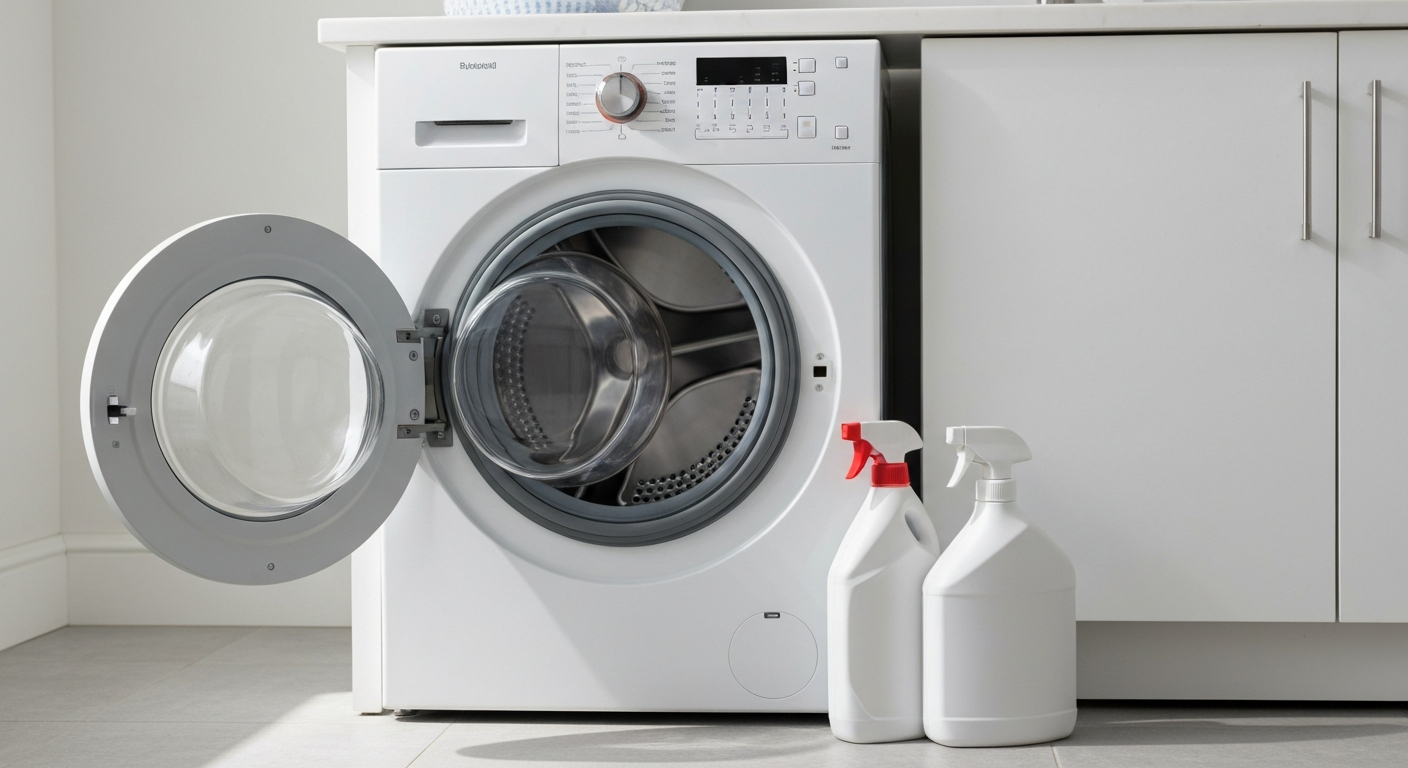
Leaking from the front (front-loaders): Door gasket or door latch. Open the door and inspect the full circumference of the gasket for tears, mold buildup in folds, or objects lodged in the seal.
Leaking from the bottom: Pump, tub-to-pump hose, or tub bearing seal. This requires tilting the machine forward and inspecting underneath.
Leaking only during fill cycle: Inlet hose connections or internal dispenser hose (the hose that runs detergent from the dispenser drawer to the drum).
Leaking only during spin/drain cycle: Drain hose, pump, or tub overflow from excessive suds.
Leaking consistently regardless of cycle: Cracked tub or failed door gasket.
How to Fix a Leaking Washing Machine
Replace the inlet hoses. Shut off both water supply valves behind the machine. Unscrew the old hoses (hand-tight; use pliers only if they're stuck), taking note of which connection is hot and which is cold (the machine's ports are usually labeled). Attach new stainless steel braided hoses — apply thread seal tape to the fittings for a watertight connection. Turn the water back on slowly and check for drips before pushing the machine back.
Reseat or replace the drain hose. Pull the drain hose out of the standpipe. It should sit 6–8 inches into the pipe but no deeper. A zip tie or drain hose guide (available at hardware stores) secures it at the correct height. If the hose itself is cracked, replace it — they're inexpensive and universal sizes fit most brands.
Replace the door gasket (front-loaders). This is a moderately involved repair: remove the front panel (typically held by a few screws at the top and bottom), pull back the gasket retaining spring, and work the old gasket off the drum lip. Apply the new gasket in reverse order. Look up the specific part number using your machine's model number (on the label inside the door frame).
Clean the door gasket. If the gasket is intact but leaking at specific spots, cleaning the gasket's folds removes debris and soap buildup that prevents a complete seal. Wipe with a damp cloth and a mild bleach solution, then inspect for tears.
Access the pump. Pump access varies by machine. On most front-loaders, the pump filter is accessible through a small panel at the front bottom — open it with a coin, place a towel and shallow pan underneath, then unscrew the filter to drain residual water and remove debris. A replacement pump requires removing the front or bottom panel and is within DIY reach with basic tools.
According to the American Home Shield maintenance guide, "replacing washing machine inlet hoses is one of the top five DIY home maintenance tasks — a degraded rubber hose under constant pressure is a leading cause of interior water damage, and replacement takes less than 15 minutes." (American Home Shield, Home Maintenance Checklist, ahs.com, accessed 2026.)
Also Read: Shop washing machine repair parts, hoses, and water leak detectors on Amazon
When to Call a Plumber or Appliance Technician
Call a professional if:
- The leak comes from a cracked outer tub (replacement usually costs more than a used machine)
- The drum bearing seal has failed (significant disassembly required)
- The machine is still under warranty (DIY repair may void coverage)
- You can't identify the source after checking all of the above
Water damage from an unrepaired washing machine leak escalates quickly. Even a slow drip behind a machine can saturate a subfloor and cause mold growth within days. Installing a washing machine leak detector — a small sensor placed on the floor behind the machine that sounds an alarm at the first sign of moisture — is inexpensive insurance.
Our Pick: WiFi-connected water leak detector for appliances — alerts your phone instantly
Reviewed and Updated on July 2, 2026 by Adelinda Manna