Finance
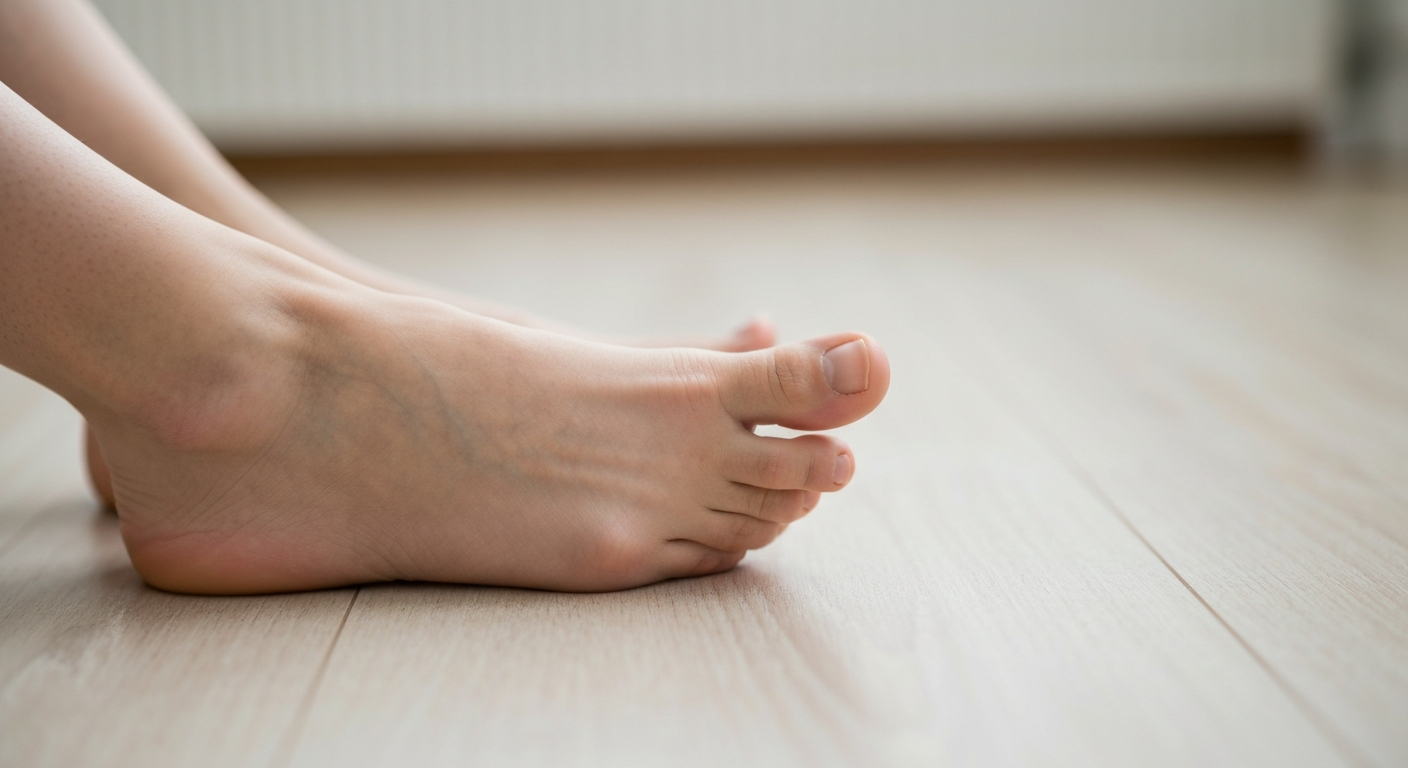

A pinky toe that leans or points sideways is almost always caused by a bunionette (tailor's bunion), an overlapping toe, or years of wearing narrow shoes that push the toe out of alignment — most cases improve with toe separators, wider footwear, and daily stretching exercises.
The medical term for a sideways-drifting pinky toe is a bunionette — a bony prominence that forms on the outer edge of the fifth metatarsal head (the joint at the base of the pinky toe). It's structurally similar to a big-toe bunion (hallux valgus), just on the opposite side of the foot. An overlapping toe is a related but separate condition where one toe physically crosses over another. Both are common, both respond to conservative treatment, and surgery is rarely the first step.
A pinky toe grows sideways primarily due to mechanical pressure — from shoes, an inherited foot structure, or muscle imbalances that gradually shift the toe out of its natural position over years.
A bunionette forms when the fifth metatarsal bone flares outward while the pinky toe angles inward toward the fourth toe. This creates a visible bony bump on the outer edge of the foot at the metatarsal head. The name "tailor's bunion" comes from the historical cross-legged sitting posture of tailors, which put chronic pressure on the outer foot.
Signs you have a bunionette:
- A visible bony bump on the outer edge of your foot near the pinky toe joint
- The pinky toe pointing inward toward the other toes at an angle
- Redness, callusing, or tenderness over the outer bump
- Pain with shoes that worsens over time, especially in narrow footwear
An overlapping toe occurs when the pinky shifts on top of the adjacent fourth toe, often due to muscle tendon imbalances. Underlapping is when the toe curls under instead. Both conditions are frequently hereditary and worsened by tight, narrow footwear over time.
Foot bone structure is largely inherited. If a parent had bunions or overlapping toes, you're at meaningfully higher risk. Narrow shoes don't cause the underlying structural tendency — but they accelerate and worsen a preexisting susceptibility significantly.
"Bunions are associated with genetic predisposition and biomechanical foot mechanics. High-heeled and narrow shoes do not cause bunions but can significantly accelerate their progression over time." — American Podiatric Medical Association at APMA.org
Early-stage sideways pinky toes respond well to conservative treatment — better shoes, toe separators, and stretching exercises. Surgery is only considered when pain is severe and all non-surgical options have been exhausted for six or more months.
Step 1: Switch to a wide toe box shoe
The single most impactful change: wear shoes with enough room for your toes to lie flat without touching the sides. Look for shoes labeled "wide" (2E or 4E) or try brands known for wide toe boxes: New Balance, Altra, Vionic, Topo Athletic, and Birkenstock-style sandals. This alone stops mechanical progression of the deformity.
Step 2: Use a silicone toe separator
Silicone separators placed between the fourth and fifth toes hold the pinky in a better position while worn. They reduce friction between the toes, redistribute pressure across the forefoot, and slow progression of the angle. Bunionette pads — soft cushions placed over the outer bump — also protect the joint from shoe irritation.
Step 3: Daily toe stretching exercises
Step 4: Night splinting for moderate cases
A bunionette splint worn during sleep holds the toe in a more corrected position overnight. These don't permanently realign bone in adults, but they reduce morning stiffness and slow progression when used consistently.
"Non-operative treatment for bunionette deformity, including shoe modification, padding, and orthotic devices, successfully reduces pain in the majority of patients and represents the recommended first-line approach before surgery is considered." — American Academy of Orthopaedic Surgeons OrthoInfo at OrthoInfo.aaos.org
See a podiatrist if pinky toe pain persists despite wide shoes and toe separators for three or more months, if the bump becomes inflamed or infected, or if the angle is so severe you can't find any comfortable footwear.
A podiatrist will take weight-bearing X-rays to measure the specific angle of deviation and determine which structural type of bunionette you have (Type I, II, or III — the type influences the surgical approach if you eventually go that route). Most people with bunionettes never need surgery; only those with severe structural deviation and persistent daily pain after exhausting conservative options typically do.
| ✓Our Pick |
Silicone toe separator and bunionette pad set for pinky toe realignment Trusted by professionals and everyday users alike — a smart investment that pays for itself. See on Amazon → |
Also Read: The Quick Fix Most People Try First for Toe Pain
A sideways pinky toe is almost always a bunionette or overlapping toe — structural changes driven by narrow shoes and sometimes genetics. Start with wide toe box footwear and silicone toe separators, add daily stretching, and add a night splint if the angle is moderate. If daily pain persists after three to six months of consistent conservative care, a podiatrist can confirm the grade of deformity and whether surgical correction is appropriate for your anatomy.
Conservative treatment — wide shoes, toe separators, stretching, and night splints — can significantly reduce pain and slow progression, but does not permanently realign adult bone. Surgical bunionette osteotomy is the only option for permanent structural realignment when deformity is severe and conservative treatment has failed.
Toe deviation is typically gradual — what feels sudden is usually reaching a threshold where shoes that used to be comfortable no longer fit, because the toe's angle has slowly increased to the point where friction and pain become noticeable. Rapid onset with swelling and severe pain could indicate gout or a stress fracture, which warrants an urgent podiatrist visit.
Toe spacers and separators hold the toe in a better position while worn and reduce friction between toes. They don't permanently straighten bone in adults, but they measurably reduce pain and slow bunionette progression — especially when combined with wide toe box shoes and regular stretching exercises.
Look for shoes with a wide or extra-wide toe box wide enough for your toes to lie flat without touching the sides. Brands with consistently wide toe boxes include New Balance, Altra, Topo Athletic, Vionic, and Birkenstock. Avoid pointed-toe shoes, tight high heels, and anything that compresses the forefoot — these measurably worsen bunionettes with continued wear.
Reviewed and Updated on July 1, 2026 by George Wright