
Technology
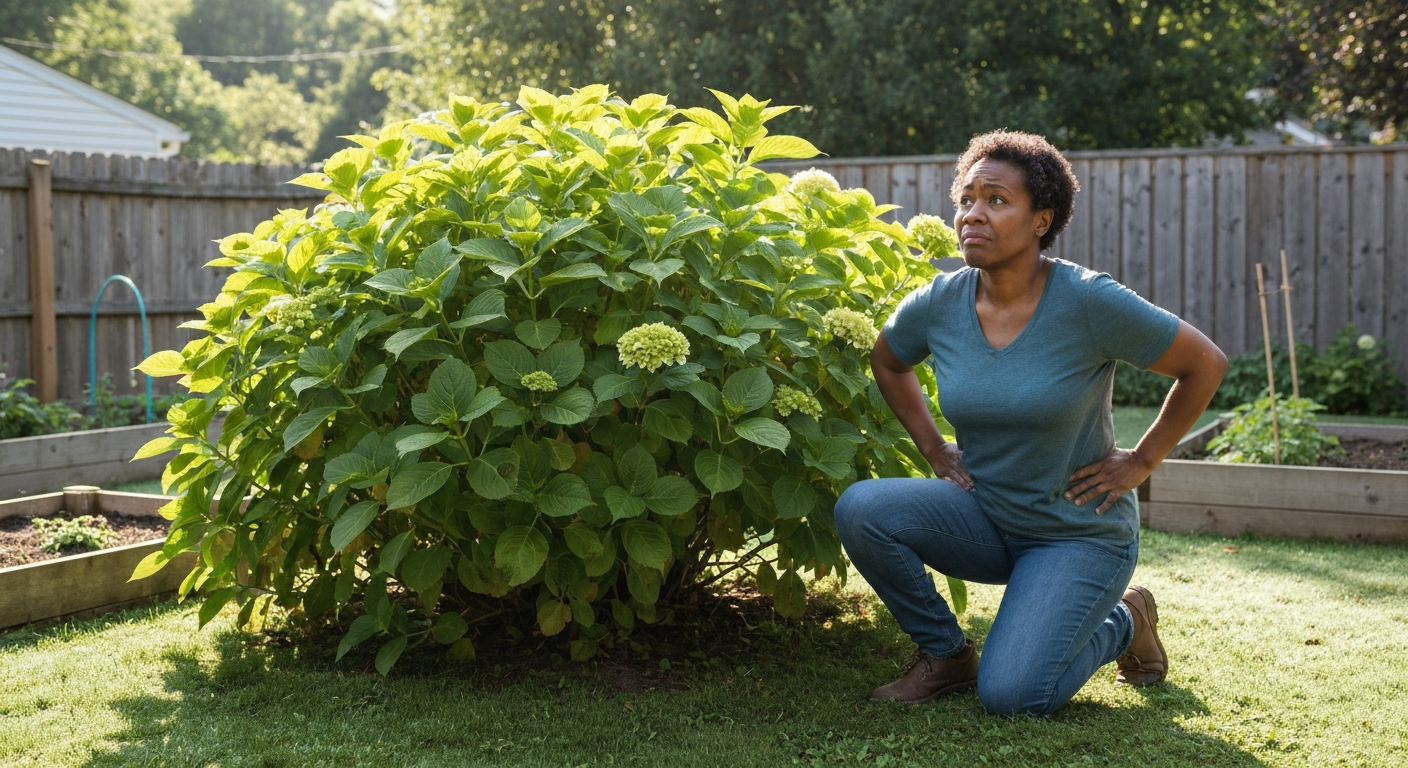

Your hydrangea isn't flowering because something has disrupted its ability to form or retain flower buds — most commonly improper pruning, late frost damage, too much shade, or excessive nitrogen fertilizer that pushes leaf growth at the expense of blooms.
If you're staring at a hydrangea covered in lush green leaves but zero flowers in 2026, you're not alone. This is one of the most common frustrations gardeners face, and the good news is that the cause is almost always fixable once you identify it. Let's work through the seven most likely reasons your hydrangea is all leaves and no flowers, and what to do about each one.
| ✓Quick Fix |
See What Solves This in Minutes Quick to get, easy to try — a sensible first move while you figure out next steps. See on Amazon → |
The single most common reason a hydrangea won't flower is pruning at the wrong time of year, which removes the buds that would have become this season's blooms.
Hydrangeas form their flower buds at different times depending on the species, and understanding this is essential:
| Hydrangea Type | When Buds Form | When to Prune |
|---|---|---|
| Bigleaf (H. macrophylla) | Late summer/fall on old wood | Immediately after flowering |
| Oakleaf (H. quercifolia) | Late summer/fall on old wood | Immediately after flowering |
| Climbing (H. petiolaris) | Late summer/fall on old wood | Immediately after flowering |
| Panicle (H. paniculata) | Spring on new wood | Late winter/early spring |
| Smooth (H. arborescens) | Spring on new wood | Late winter/early spring |
If you pruned your bigleaf hydrangea in fall, winter, or early spring, you likely cut off the stems that were carrying next year's flower buds. Those buds had already formed — they were just dormant and invisible. The plant will grow back vigorously with beautiful foliage, but it won't have any flowers until next year at the earliest.
The fix is simple but requires patience: if you have a bigleaf, oakleaf, or climbing hydrangea, only prune immediately after it finishes flowering in summer. For panicle and smooth hydrangeas, prune in late winter before new growth begins.
"Many gardeners inadvertently remove flower buds by pruning in fall or early spring, not realizing that most hydrangeas set their buds the previous season." — Dr. Michael Dirr at University of Georgia Extension
Even if you never touched your pruners, a late spring frost can kill developing flower buds while leaving the rest of the plant unharmed — resulting in a hydrangea that's all leaves and no flowers.
This is particularly devastating for bigleaf hydrangeas (the popular blue and pink mopheads), which start pushing out tender new growth early in spring. When temperatures drop below 28°F (-2°C) after buds have begun swelling, the flower buds can be destroyed while the leaf buds survive.
Signs that frost damage is your culprit:
If you live in USDA zones 5 or 6, this is an especially common problem. The solution is to protect vulnerable hydrangeas when late frost is forecast by covering them with frost cloth or old bedsheets. You can also site new hydrangea plantings near the house foundation or under the canopy of deciduous trees, which offer a few degrees of protection.
| ✓Our Pick |
Hydrangea fertilizer and bloom boosters on Amazon A top-rated pick that works — readers who tried this reported noticeable improvement within days. See on Amazon → |
Hydrangeas need at least 3–6 hours of direct sunlight per day to produce flowers — too much shade results in healthy foliage but few or no blooms.
While hydrangeas are often recommended for shade gardens, this advice comes with an asterisk. Most hydrangeas tolerate partial shade, meaning they still need several hours of direct sun, ideally morning sun with afternoon shade. Deep shade produces disappointing results across almost all hydrangea species.
How to assess your site:
Over time, conditions change. A hydrangea that bloomed prolifically when you planted it five years ago may now be shaded out by a maturing tree canopy overhead. Look up — has something changed?
If inadequate light is your problem, you have two options: transplant the hydrangea to a sunnier location in fall or early spring, or selectively thin out overhead branches to let more light through.
High-nitrogen fertilizers push hydrangeas to produce abundant foliage at the expense of flowers — your plant looks lush and green but never blooms.
This is a sneaky cause because your hydrangea looks perfectly healthy, even impressive. You might think it's thriving. But nitrogen encourages vegetative growth (leaves and stems), while phosphorus supports flower and root development.
Common mistakes that lead to nitrogen overload:
Check the NPK ratio on your fertilizer. The three numbers represent nitrogen-phosphorus-potassium. For flowering hydrangeas, you want a balanced or bloom-boosting formula where the middle number (phosphorus) is equal to or higher than the first number. Something like 10-30-20 or 10-10-10 works well.
"Over-fertilization, especially with high-nitrogen fertilizers, will produce lush green growth at the expense of blooms." — University of Maryland Extension
Stop fertilizing hydrangeas after mid-July. Late-season feeding encourages tender new growth that won't harden off before winter, making the plant more vulnerable to cold damage.
Also Read: Why Is My Electric Bill So High? Causes & Fixes
Newly planted hydrangeas often take 2–3 years to establish before they start blooming reliably, even if they had flowers at the nursery.
When you buy a hydrangea in bloom at the garden center, those flowers were forced in a greenhouse under ideal conditions. Once transplanted to your garden, the plant redirects its energy toward establishing roots and adapting to its new environment. This is normal and healthy — a well-established root system leads to better long-term performance.
What to expect by year:
The best thing you can do for a young hydrangea is give it consistent water (about 1 inch per week), avoid over-fertilizing, and resist the urge to prune. Let it establish itself. Patience pays off.
Wildlife browsing on hydrangeas often targets the tender tips where flower buds form, leaving you with a well-leafed plant that never blooms.
Deer particularly love hydrangeas and tend to browse them in late winter and early spring — exactly when those precious flower buds are sitting exposed on the stem tips. Unlike pruning damage, deer browsing often looks ragged and uneven.
Signs of deer or rabbit damage:
Solutions include:
If you confirm wildlife is the culprit, make protecting your hydrangeas a late-winter priority before the buds become vulnerable.
Some hydrangea cultivars are poorly matched to certain climates, and no amount of care will make them flower reliably where they're not adapted.
Bigleaf hydrangeas (Hydrangea macrophylla) are the showiest and most popular, but they're also the fussiest. Their flower buds are vulnerable to winter cold and late frost, making them unreliable bloomers in USDA zones 5 and colder.
If you've eliminated all other causes and your bigleaf hydrangea still won't bloom, you may have a climate compatibility problem. The solutions are:
| Approach | Details |
|---|---|
| Switch to a reblooming variety | Cultivars like 'Endless Summer', 'BloomStruck', and 'Let's Dance' bloom on both old and new wood, giving you a second chance if old-wood buds are killed |
| Plant panicle hydrangeas instead | H. paniculata (like 'Limelight' or 'Little Lime') is reliable in zones 3–8 because it blooms on new growth that forms after the last frost |
| Plant smooth hydrangeas | H. arborescens (like 'Annabelle') is native to North America and extremely cold-hardy, blooming on new wood |
If you're in zones 4–5 and frustrated with mophead hydrangeas that won't bloom, honestly consider replacing them with panicle or smooth hydrangeas. You'll save yourself years of disappointment.
Run through this checklist to pinpoint your specific cause.
Work through this list honestly, and you'll almost always find your answer.
Your hydrangea isn't flowering because of pruning at the wrong time, late frost damage, insufficient sunlight, over-fertilization with nitrogen, youth, wildlife browsing, or poor climate match. Identify which cause applies to your situation by checking when you pruned, whether frost occurred, how much sun the plant gets, what you've fertilized with, and how long it's been established. Once you address the specific cause, most hydrangeas will return to blooming within one to two growing seasons.
If you haven't pruned, the most likely culprits are late frost damage, insufficient sunlight, or excessive nitrogen fertilizer. Late spring frosts can kill flower buds invisibly — the plant leafs out normally but never flowers. Check whether your area had unexpected cold snaps after bud swell began. Also assess whether the site has become shadier over time as nearby trees have grown.
Chronic failure to bloom across multiple years usually points to a fundamental mismatch between the plant's needs and its growing conditions. The most common causes are persistent shade, repeated late-frost damage in cold climates, or a bigleaf hydrangea variety that simply isn't suited to your zone. Consider switching to a reblooming variety or a panicle/smooth hydrangea that blooms on new wood.
Most hydrangeas need 2–3 years after transplanting to bloom reliably. During this establishment period, the plant prioritizes root growth over flowering. If your hydrangea was blooming at the nursery but hasn't flowered since you planted it, give it time. Ensure it receives adequate water and avoid heavy fertilization or pruning while it establishes.
Overwatering alone won't prevent flowering, but consistently waterlogged soil can lead to root rot, which weakens the entire plant and reduces bloom production. Hydrangeas need moist but well-drained soil. If your soil stays soggy, improve drainage or consider raised beds. Conversely, drought stress during bud formation can also reduce blooms the following year.
Yes — your hydrangea will recover, but you'll need to wait. If you removed next year's flower buds by pruning at the wrong time, simply don't prune this year and allow the plant to set new buds. For bigleaf hydrangeas, this means you'll skip one bloom season but should see flowers the following summer, assuming no other issues interfere.
Reviewed and Updated on June 20, 2026 by George Wright