
DIY
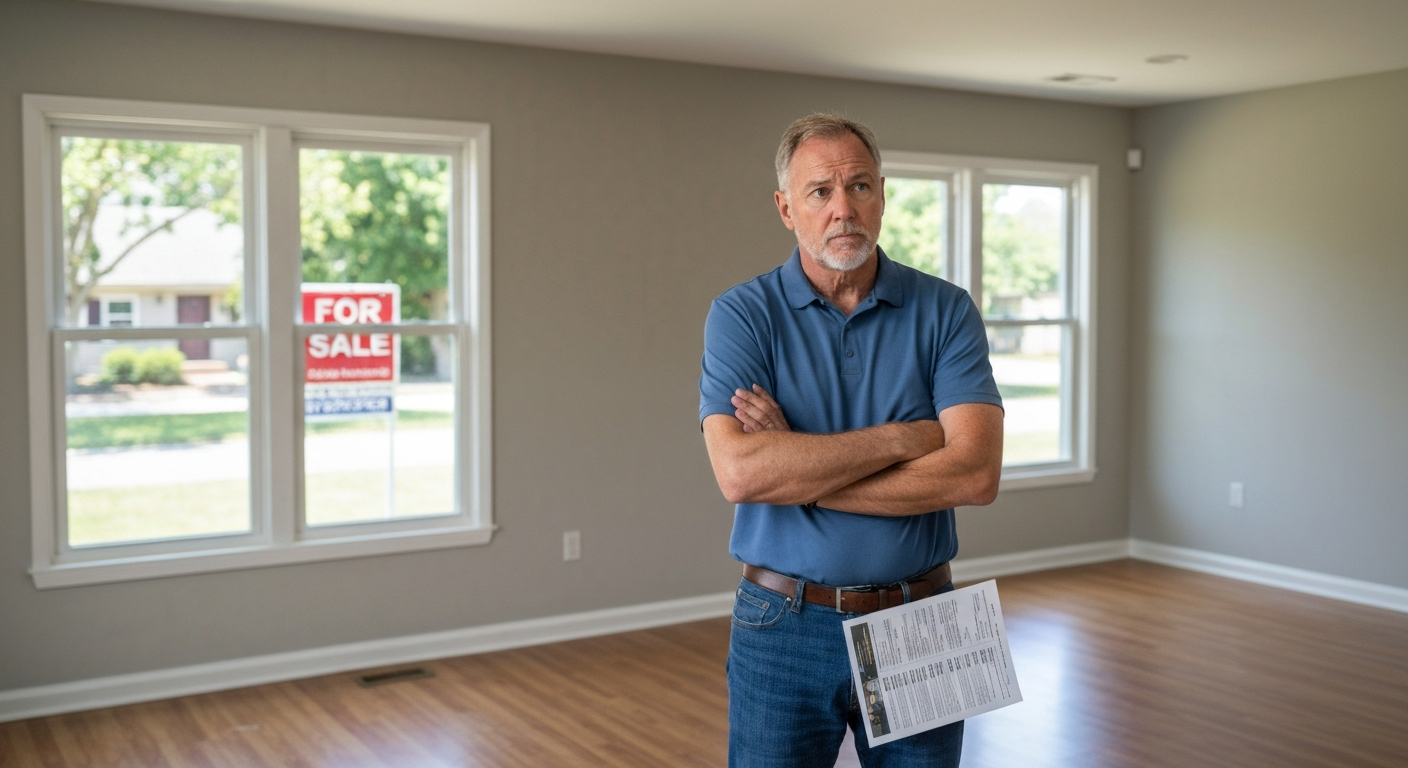

Your house isn't selling because of one or more fixable problems: the price is too high for current market conditions, the listing photos or presentation are weak, the property needs repairs buyers won't overlook, or your marketing isn't reaching the right audience.
The average home in 2026 sits on the market for 55–65 days before going under contract, but if you've passed that window without serious offers, something specific is turning buyers away. The good news: nearly every reason a house doesn't sell has a clear solution. Let's diagnose exactly what's stalling your sale and how to fix it.
| ✓Our Pick |
Home staging kit to improve buyer first impressions No special skills required — straightforward to use and most orders ship quickly. See on Amazon → |
Overpricing is the number one reason homes don't sell—and in 2026's higher-rate environment, buyers are more price-sensitive than they've been in years.
When mortgage rates hover between 6.5% and 7.5%, buyers have less purchasing power. A home priced at $450,000 in 2021 might only attract buyers who could afford $380,000 today because their monthly payment on the same loan amount is hundreds of dollars higher. If you priced your home based on what your neighbor got two years ago, you're likely above what today's buyers can actually pay.
The clearest sign of overpricing is showing activity without offers. If 20 groups have toured your home and none have made an offer, the price is the problem. Buyers are comparing your home to others in real time, and they're walking away because something else offers better value at the same price point.
"Homes priced right from the start sell faster and often for more money than homes that require price reductions. The first two weeks on market are critical—that's when buyer interest peaks." — National Association of Realtors
Request a fresh comparative market analysis from your agent or an independent appraiser. Focus on sold properties within the last 60 days, not active listings. Compare price per square foot, days on market, and final sale price versus original asking price. If comparable homes sold for 95% of asking price and you're still at 100% after 45 days, you need a reduction.
Small cuts—$5,000 here, $3,000 there—signal desperation without changing buyer perception. Research from Zillow shows that price reductions under 3% rarely generate new interest. If you're going to cut, cut meaningfully: 5–7% brings your listing back into search results for a new buyer pool and signals you're serious about selling.
Poor photography kills more listings than any other single factor because 95% of buyers start their search online—and they decide within seconds whether to click or scroll past.
Dark, blurry, or cluttered photos tell buyers the home isn't worth their time. Wide-angle shots that distort rooms, photos taken before cleaning, or images that show pet stains, personal items, and disrepair create an immediate negative impression that's hard to reverse.
| Photo Quality | Average Days on Market | Likelihood of Showing Request |
|---|---|---|
| Professional (HDR, edited) | 32 days | 118% more likely |
| Agent smartphone photos | 52 days | Baseline |
| Homeowner smartphone photos | 78 days | 47% less likely |
Professional real estate photography costs $150–$400 for most homes. That investment pays for itself many times over in faster sales and stronger offers. If your listing has been sitting, review your photos with fresh eyes—or better, ask a friend who hasn't seen the house to give honest feedback.
Generic descriptions like "great starter home" or "won't last long" are meaningless. Effective listing copy highlights specific features: "2026 HVAC system," "quarter-acre lot backing to greenbelt," "walk to Metro station." Include the details that differentiate your home from the dozen others a buyer is considering.
Also Read: Why Is My Home Not Selling? 8 Causes & Proven Fixes
Buyers in 2026 are cautious about repair costs, and they'll skip homes with obvious deferred maintenance rather than negotiate—they simply move to the next listing.
Certain condition issues are deal-breakers regardless of price:
"Buyers consistently cite uncertainty about repair costs as their top concern when viewing older homes. Pre-listing inspections that identify and address issues upfront reduce fall-through rates by over 30%." — American Society of Home Inspectors
Not every repair is worth making. Focus on issues that trigger lender concerns (these can kill financing) and problems visible during showings. Cosmetic updates like fresh paint and new carpet typically return $3–5 for every $1 spent. Major renovations rarely recoup their cost in a sale—kitchen remodels return only 50–60 cents on the dollar in most markets.
Get a pre-listing inspection for $300–$500. You'll know exactly what buyers will find, and you can either fix critical items or price accordingly with full disclosure.
Staging isn't about decorating to your taste; it's about making the home feel move-in ready for the broadest possible buyer pool.
Common staging mistakes that stall sales:
Virtual staging costs $25–75 per room and can transform empty or poorly furnished spaces in photos. Professional in-person staging runs $1,500–4,000 per month but is worth considering for vacant homes over $500,000.
If buyers are touring but not offering, the problem is inside the house—something they see in person that photos didn't reveal.
Common showing killers:
Consider getting direct feedback from your agent after every showing. If multiple buyers mention the same issue, address it immediately.
| ✓Our Pick |
Professional deep cleaning service for move-out prep Great value for money — this product tackles the root cause rather than just masking the symptoms. See on Amazon → |
Listing on the MLS isn't enough—effective marketing requires a multi-channel strategy that puts your home in front of active buyers where they actually search.
In 2026, buyers find homes through:
| Channel | Buyer Usage | Your Listing Needs |
|---|---|---|
| Zillow/Redfin/Realtor.com | 78% | Complete listing, pro photos, 3D tour |
| Instagram/Facebook | 34% | Video walkthroughs, targeted ads |
| YouTube | 22% | Property tour video |
| Agent direct outreach | 41% | Broker open house, email blast |
| Open houses | 28% | Weekend events, signage |
Ask your agent for a marketing report: How many online views has your listing received? How does that compare to similar homes? If views are low, the photos or listing description need work. If views are high but showings are low, the price or disclosed condition is scaring people off.
Not all agents provide the same level of service. Your agent should be:
If you're not getting proactive communication, it may be time for a frank conversation—or a new agent. Most listing agreements allow termination with notice if the agent isn't meeting their obligations.
Real estate has seasonal patterns, and listing at the wrong time can add weeks or months to your sale.
Spring (March–May) and early fall (September–October) are peak selling seasons in most U.S. markets. Summer can be strong but slows in late July/August as families vacation. Winter months—especially late November through January—see the fewest active buyers, though those who are looking tend to be serious.
If you listed in a slow period and the home sat, the listing may have become "stale" in buyers' minds. Options include:
You can fix price, condition, and marketing—but you can't fix location, and some location factors genuinely limit your buyer pool.
Location challenges that extend time on market:
These issues don't make a home unsellable—they make it unsellable at the wrong price. Homes with location challenges need to be priced 10–20% below comparable homes in more desirable spots to attract value-focused buyers.
Also Read: Why Is My Motorcycle Insurance So High? 9 Factors & Fixes
If your home has been listed for 90+ days with minimal activity and your agent hasn't proposed concrete changes, it's time to reevaluate the relationship.
Signs your agent is the problem:
Interview 2–3 new agents before making a change. Ask specifically: "What would you do differently to sell this home?" A good agent will have a concrete plan, not vague promises.
Your house isn't selling because of a specific, identifiable problem—most likely price, presentation, condition, or marketing. The 2026 market rewards homes that are priced competitively from day one, photographed professionally, cleaned and staged for broad appeal, and marketed aggressively across multiple channels. Diagnose which factor is stalling your sale, make the necessary correction, and your home will move.
Anything over 60 days in an average market signals a problem. The specific threshold varies by region—homes in San Francisco may be concerning at 21 days while homes in rural areas routinely take 90+. Compare your days on market to the local average for your price range. If you're significantly above average, take action rather than waiting longer.
Withdrawing and relisting can reset your days on market and generate fresh buyer interest, but it only works if you also fix the underlying problem. If you relist at the same price with the same photos, you'll get the same results. Use the break to address pricing, staging, or condition issues before coming back to market.
Seller concessions—paying for buyer closing costs or offering rate buydowns—can attract buyers in a slower market. A 2-1 rate buydown costs sellers roughly 1.5% of the sale price but can make monthly payments significantly more affordable for buyers in the crucial first two years. This strategy works best when your price is already competitive but buyers are struggling with affordability.
Even in strong markets, overpriced homes sit. Buyers have real-time data and know when a home is above comparable sales. Additionally, condition issues that seemed minor in a seller's market become deal-breakers when buyers have options. If your home isn't selling while others around you are, the problem is specific to your listing.
Visible neighbor issues—unkempt yards, multiple cars on blocks, hostile behavior during showings—can absolutely deter buyers. You can't control your neighbors, but you can control price and disclosure. Be honest about any known disputes, and price to account for the impact. Some buyers specifically want lower-priced homes and are less concerned about neighborhood aesthetics.
Reviewed and Updated on May 1, 2026 by Adelinda Manna