Health


Your hair is greasy because your scalp is producing too much sebum—the natural oil made by sebaceous glands—and that oil is traveling down the hair shaft faster than you're removing it.
The culprits behind always-greasy hair range from overwashing (which triggers your scalp to compensate by making more oil) to hormones, product buildup, and even the wrong brush. The good news: once you identify your specific triggers, you can reset your scalp and extend the time between washes from one day to three or more.
| 🛒Amazon Pick |
Best Clarifying Shampoos for Oily Hair on Amazon Top-rated pick recommended by professionals -- save time and money by getting it right the first time. See on Amazon → |
Sebaceous glands attached to every hair follicle produce sebum continuously, and several factors—from genetics to daily habits—determine how quickly that oil overwhelms your hair.
Sebum itself isn't the enemy. It waterproofs your scalp, protects hair from brittleness, and maintains the skin's natural barrier. Problems arise when production outpaces removal, or when something disrupts the scalp's equilibrium.
Your hair might feel greasy after just one day because of a feedback loop. Aggressive washing strips sebum, and your scalp responds by ramping up production. Meanwhile, styling products, dry shampoo residue, and environmental pollutants accumulate, creating a sticky film that attracts even more oil.
"Sebum production is influenced by androgens, genetics, and external factors such as humidity and occlusive hair products." — Dr. Shilpi Khetarpal, MD at Cleveland Clinic
Understanding the mechanism helps you target the right fix instead of defaulting to more shampooing—which often makes the cycle worse.
Washing daily—especially with harsh sulfate shampoos—strips sebum so aggressively that your scalp overcompensates by producing even more oil.
Every time you lather up, you remove the protective lipid layer. Your sebaceous glands interpret this as an emergency and increase output. The result: hair that feels greasy within 24 hours, prompting another wash and perpetuating the cycle.
Try extending washes gradually. If you currently shampoo daily, move to every other day for two weeks, then every third day. Your scalp needs time to recalibrate.
Conditioners, serums, dry shampoos, and styling products leave residue that traps oil and makes hair look limp and greasy faster than it should.
Silicone-based products coat the hair shaft. Without periodic clarifying washes, layers accumulate. The buildup physically prevents sebum from distributing naturally, pooling it at the roots instead.
A clarifying shampoo once a week—or an apple cider vinegar rinse—can reset the slate without stripping moisture from the lengths.
Conditioner is designed for mid-lengths and ends, not roots—applying it to your scalp adds unnecessary oils and weighs down fine hair.
Many people slather conditioner from root to tip out of habit. Conditioner ingredients include emollients and fatty alcohols that mimic sebum. When applied to an already-oily scalp, they compound the problem.
Keep conditioner at least two inches from your roots. Focus on the ends, which are older and drier.
Fluctuations in androgens—during puberty, menstruation, pregnancy, or perimenopause—directly increase sebum production.
Androgens stimulate sebaceous glands. That's why teenagers often struggle with both oily skin and greasy hair simultaneously. Hormonal shifts throughout the menstrual cycle can make hair noticeably greasier in the days before a period.
If your greasy hair coincides with other hormonal symptoms—acne, irregular periods, unusual hair growth—a dermatologist or endocrinologist can evaluate whether an underlying condition like polycystic ovary syndrome (PCOS) is involved.
"Hormonal fluctuations, particularly increases in androgens, are a primary driver of sebum overproduction in both adolescents and adults." — American Academy of Dermatology
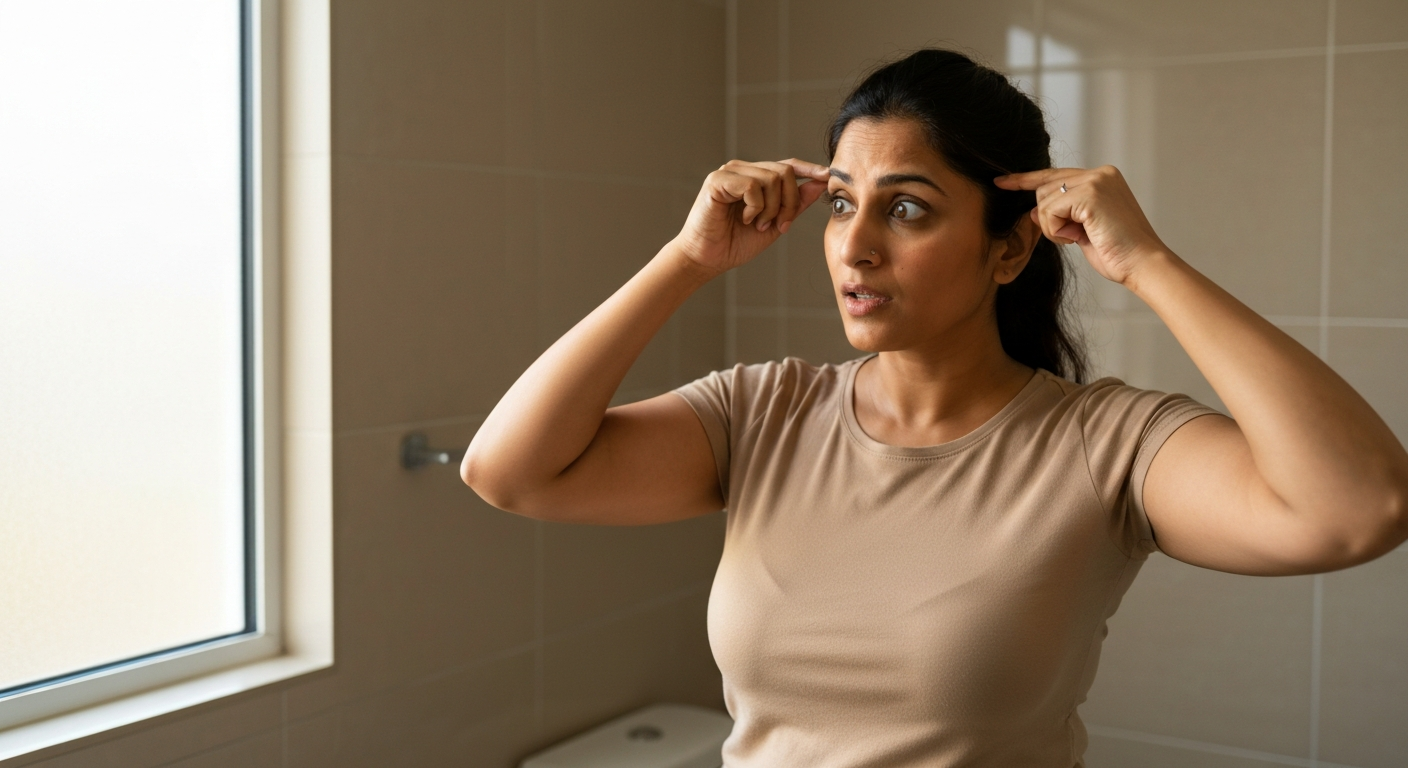
Every time you run your fingers through your hair, twist a strand, or adjust your part, you transfer oils from your hands to your strands.
Fingertips carry their own sebum plus anything you've touched—your phone screen, your face, door handles. Habitual hair-touching accelerates the greasy look, especially around the face and crown.
Awareness is the first step. Keep a hair tie on your wrist as a tactile reminder to stop touching.
High-glycemic foods and diets heavy in saturated fats have been linked to increased sebum production.
Sugary snacks and refined carbs spike insulin, which in turn can elevate androgen levels. Some studies suggest dairy may also influence oil production, though evidence is mixed.
A balanced diet won't eliminate greasy hair overnight, but reducing processed foods and increasing vegetables, lean proteins, and omega-3 fatty acids supports overall skin and scalp health.
Mineral deposits from hard water—calcium and magnesium—bind to hair and scalp, creating a film that traps sebum and residue.
Hard water affects roughly 85% of American households. The mineral buildup doesn't rinse away easily and can make even freshly washed hair feel heavy and dull.
Solutions include a showerhead filter designed to reduce mineral content, or a chelating shampoo that binds to and removes mineral deposits.
| 🛒Amazon Pick |
Showerhead Filters for Hard Water on Amazon Backed by strong customer feedback -- most recommended in forums and Q&A communities. See on Amazon → |
Chronic stress elevates cortisol, which can trigger increased sebum production as part of the body's inflammatory response.
The scalp is rich in cortisol receptors. When stress becomes chronic, sebaceous glands may stay in overdrive. You might notice your hair getting greasier during high-pressure periods at work or during emotional upheaval.
Stress management alone won't fix oily hair, but it can be one piece of the puzzle—especially if greasiness correlates with anxious periods.
Dirty brushes, combs, and pillowcases harbor old oil, product residue, and bacteria that transfer back to your hair every time you use them.
If you brush your hair with a comb that hasn't been cleaned in months, you're redistributing yesterday's sebum onto today's roots. Pillowcases collect facial oils, drool, and hair products over the course of a week.
Clean brushes weekly by removing hair and soaking bristles in warm, soapy water. Change your pillowcase every three to four days, or switch to a silk or satin case that absorbs less oil.
Also Read: Why Is My Hair So Oily? 7 Causes & Proven Fixes
Resetting an oily scalp requires a two-phase approach—stop the behaviors making it worse, then train your scalp to produce less sebum over time.
| Strategy | How It Helps | Time to See Results |
|---|---|---|
| Extend wash intervals gradually | Allows sebaceous glands to recalibrate | 2–4 weeks |
| Switch to sulfate-free shampoo | Cleanses without aggressive stripping | Immediate to 1 week |
| Use clarifying shampoo weekly | Removes product and mineral buildup | After first use |
| Apply dry shampoo preventively | Absorbs oil before it shows | Same-day |
| Condition ends only | Prevents added oils at roots | Immediate |
| Wash brushes and change pillowcases | Stops recontamination | Within days |
| Install a showerhead filter | Reduces mineral film on hair | 1–2 weeks |
Dry shampoo absorbs excess oil and extends the time between washes, but overuse leads to buildup that makes greasiness worse in the long run.
The starches and powders in dry shampoo soak up sebum on contact. That's genuinely useful for day-two or day-three hair. Problems arise when people rely on it daily without ever fully cleansing the scalp. Layers of dry shampoo residue clog follicles and trap more oil.
Use dry shampoo strategically—apply it at night so it has time to absorb, and limit consecutive days of use to two or three before a proper wash.
| 🛒Amazon Pick |
Top-Rated Dry Shampoos for Oily Hair on Amazon Top-rated pick recommended by professionals -- save time and money by getting it right the first time. See on Amazon → |
A weekly scalp scrub or exfoliating treatment removes dead skin cells, product residue, and excess sebum that regular shampoo misses.
Think of it like exfoliating your face. Dead skin and oil can clog follicles, disrupting the hair growth cycle and trapping sebum at the surface. A gentle scrub—physical or chemical (salicylic acid)—clears the way for healthier oil distribution.
Don't overdo it. Once a week is enough. More frequent scrubbing can irritate the scalp and trigger—you guessed it—more oil production.
"Scalp exfoliation can help remove buildup and improve the overall health of the scalp, but should be done gently and not more than once per week." — Dr. Iris Rubin, MD at SEEN Haircare
If your hair remains persistently greasy despite adjusting habits, or if you notice scalp redness, flaking, itching, or hair loss, a dermatologist can rule out conditions like seborrheic dermatitis or hormonal imbalances.
Seborrheic dermatitis causes an overproduction of sebum alongside yeast overgrowth, leading to greasy scales and irritation. It requires medicated shampoos containing ketoconazole or zinc pyrithione.
Hormonal conditions like PCOS can drive chronic oiliness that won't respond to topical fixes alone. Blood tests and professional evaluation are necessary to identify and treat the root cause.
Also Read: Why Is My Face Red? 9 Causes & How to Calm It
| If Your Cause Is... | Your Best Fix Is... |
|---|---|
| Overwashing | Extend wash intervals, switch to sulfate-free shampoo |
| Product buildup | Weekly clarifying shampoo or ACV rinse |
| Wrong conditioner placement | Apply to ends only, avoid roots |
| Hormonal fluctuations | Consult a dermatologist, manage stress |
| Touching hair habitually | Tie hair back, keep hands busy |
| Hard water | Showerhead filter, chelating shampoo |
| Dirty tools/pillowcases | Clean brushes weekly, change pillowcase often |
Your hair gets greasy because sebaceous glands produce more oil than your hair can handle—often due to overwashing, product buildup, hormones, or contaminated tools. The fix isn't washing more; it's washing smarter. Extend intervals between shampoos, use clarifying treatments weekly, condition only the ends, and keep your brushes and pillowcases clean. Most people see improvement within two to four weeks of adjusting their routine. If greasiness persists alongside scalp irritation or hair loss, see a dermatologist to rule out seborrheic dermatitis or hormonal causes.
Hair that looks oily within 24 hours of washing usually signals a stripped scalp overcompensating with sebum. Daily shampooing with sulfate-heavy formulas removes too much oil, triggering a rebound effect. Switching to a gentler shampoo and gradually extending wash intervals allows sebaceous glands to stabilize, often extending freshness to two or three days.
A sudden increase in oiliness can result from hormonal shifts (menstrual cycle, new birth control, perimenopause), seasonal humidity changes, or a new product that doesn't agree with your scalp. Stress and dietary changes can also play a role. Review what's changed recently and address those factors first.
Yes. Tight ponytails and buns concentrate oil at the crown and can stimulate the scalp through tension. Wearing hair down allows sebum to distribute more evenly. If you need an updo, opt for loose styles and vary the placement of elastic bands to avoid constant pressure on one spot.
Hot water opens the cuticle and can stimulate oil glands, while very cold water may not rinse product effectively. Lukewarm water is ideal—it cleanses without overstimulating the scalp. Finish with a cool rinse to close the cuticle and add shine without triggering excess oil.
Shorter hair shows oil faster because there's less length for sebum to travel before saturating the strands. However, cutting doesn't change how much oil your scalp produces. If you prefer short styles, you may simply need to adjust wash frequency or rely more on dry shampoo.
Reviewed and Updated on April 20, 2026 by George Wright