Technology
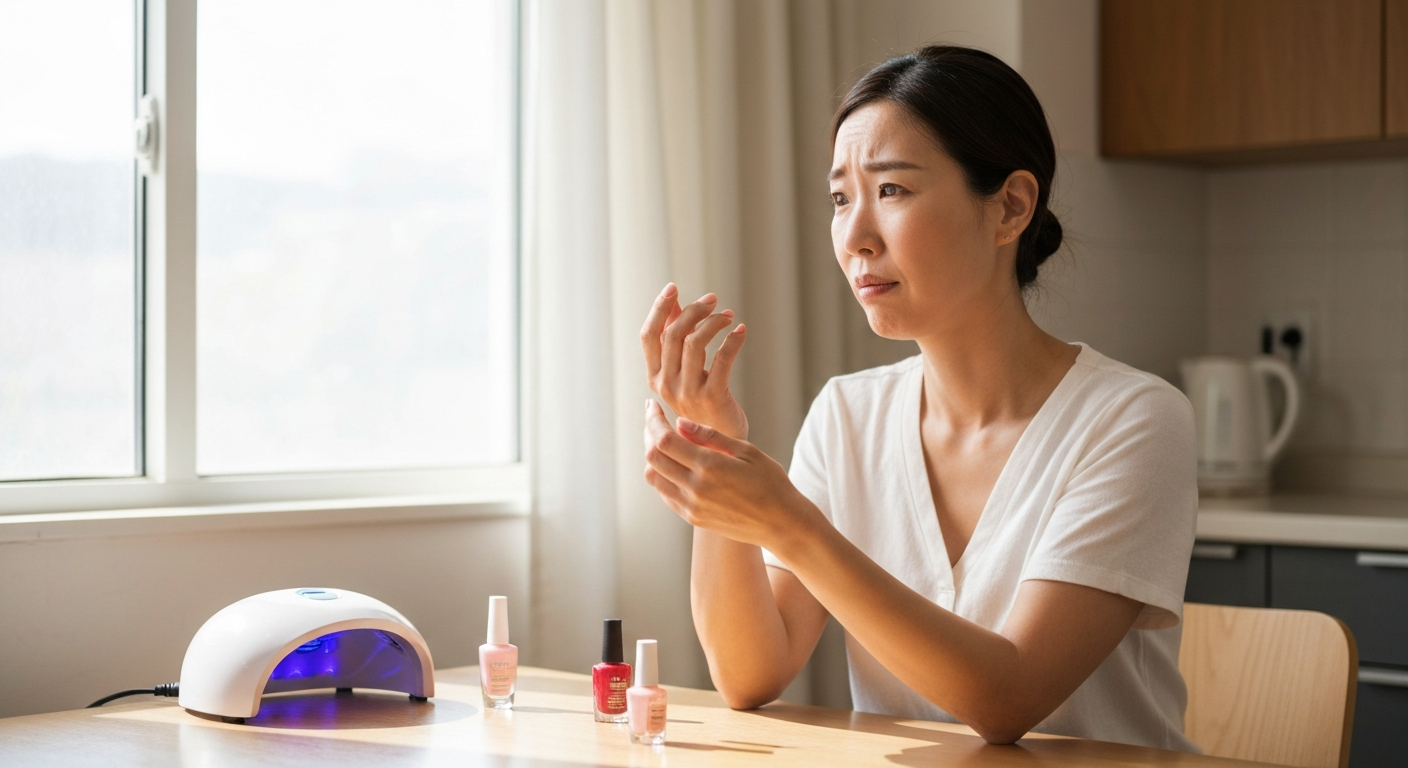

Gel polish stays sticky after curing because of the inhibition layer—a tacky surface caused by oxygen blocking the top layer from hardening fully—and you're meant to wipe it off with isopropyl alcohol or a gel cleanser, not cure it away.
This sticky residue isn't a sign that something went wrong. In fact, most gel polishes are formulated to produce this tacky layer, called the oxygen inhibition layer, as part of the normal curing process. The real problems start when your gel polish feels gummy throughout, peels easily, or stays wet-looking even after multiple rounds under the lamp. Those issues point to under-curing, incompatible products, or technique errors that need fixing.
| ✓Our Pick |
UV/LED gel curing lamps for salon-quality nails at home Simple to use and genuinely effective — for many people this is all they ever needed. See on Amazon → |
The inhibition layer is a thin, uncured residue that forms on top of gel polish when oxygen in the air prevents the surface from polymerizing completely—it's normal and designed to be wiped off.
When UV or LED light hits gel polish, it triggers a chemical reaction called photopolymerization. The photoinitiators in the gel absorb the light energy and cause the monomers and oligomers (the building blocks of the gel) to link together into a hard, durable finish. However, oxygen molecules at the very surface of the polish interfere with this reaction. They absorb the free radicals needed for curing, leaving the top 10-50 micrometers of the polish slightly uncured and tacky.
This layer actually serves a purpose. It helps each coat of gel polish bond chemically to the next layer. When you apply your color coat over the sticky base coat, that inhibition layer creates adhesion between them. The same happens between color layers and between your color and top coat. Without this tackiness, your gel manicure would be more prone to peeling and lifting.
"The oxygen inhibition layer is a direct result of the radical polymerization process. Oxygen acts as a radical scavenger, terminating the polymerization reaction at the surface." — Dr. Robert Liska at Vienna University of Technology
| ✓Quick Fix |
The Fastest Fix People Try for This A low-cost, no-commitment option to rule out before spending more on this problem. See on Amazon → |
If your gel polish feels sticky, wet, or gummy throughout—not just on the surface—the problem is usually under-curing, wrong lamp type, thick layers, or incompatible products.
Not all UV and LED lamps deliver the same curing power. Budget lamps under 24 watts often struggle to cure thicker gel formulas or highly pigmented colors like white, black, and neon shades. If your lamp is older, the bulbs may have degraded—UV bulbs lose effectiveness after 6-12 months of regular use, even if they still light up. LED bulbs last longer but can still weaken over time.
Check your lamp's wattage and compare it to what the gel polish brand recommends. Most professional-grade gels require at least 36-48 watts for proper curing.
This is the most common mistake. When you apply gel polish in thick, goopy layers, the UV or LED light cannot penetrate all the way through to cure the bottom of the layer. The surface might feel cured, but underneath it stays soft and uncured, making the whole nail feel squishy or peel off in sheets within days.
Each coat of gel should be thin and even—about the thickness of a credit card. If you can see pooling at the cuticles or sides of your nail, you've applied too much.
UV-only gel polishes require a UV lamp. LED gel polishes require an LED lamp. Many modern formulas are labeled "UV/LED compatible," meaning they cure under either light type. However, some specialty gels—particularly hard gels, builder gels, and certain professional lines—are formulated for specific wavelengths.
If your gel polish doesn't specify LED compatibility and you're using an LED lamp, it may not cure properly. Check the bottle or brand website for curing specifications.
Even a powerful lamp won't cure gel properly if your hand isn't positioned correctly inside it. The light needs to hit the nail surface directly. If your thumb is at an angle or your fingers are curled, parts of the nail won't receive enough light exposure and will stay tacky or soft.
Cure thumbs separately, holding them flat and centered under the lamp. For other fingers, keep them flat and spread slightly so light reaches each nail evenly.
Different gel polishes require different curing times. LED lamps typically cure polish in 30-60 seconds per coat, while UV lamps need 2 minutes. However, darker colors, glitter polishes, and thick formulas often need longer—sometimes double the standard time.
If you're removing your hand from the lamp too early, the polish won't fully harden. Follow the time recommendations on your specific gel polish, not a generic guideline.
Mixing gel polish brands can cause curing issues. A base coat from one brand, color from another, and top coat from a third may have different chemical formulations that don't bond or cure together properly. This can result in sticky layers that won't harden, or a manicure that peels and chips within days.
"Different gel systems use different photoinitiator packages. Using products from the same system ensures the chemistry is designed to work together." — Doug Schoon, Nail Industry Scientist and Educator
Wipe the tacky layer off your cured top coat with 90%+ isopropyl alcohol or the gel cleanser recommended by your polish brand—this reveals the shiny, hard finish underneath.
After your final top coat is fully cured, saturate a lint-free wipe with 90% or higher isopropyl alcohol. Wipe each nail firmly in one direction, using a fresh section of the wipe for each nail to avoid spreading residue. Avoid cotton balls or paper towels, which leave fibers stuck to your fresh manicure.
Some gel polish brands sell their own "gel cleansers" specifically formulated for their products. These work well but aren't strictly necessary—isopropyl alcohol does the same job at a fraction of the cost.
| Removal Method | Effectiveness | Cost | Notes |
|---|---|---|---|
| 90%+ isopropyl alcohol | Excellent | Low | Most common, works with all brands |
| Brand-specific gel cleanser | Excellent | Medium | Optimized for specific formulas |
| 70% isopropyl alcohol | Fair | Low | May leave slight residue |
| Acetone | Works but not recommended | Low | Can dull the shine of some top coats |
| Non-acetone nail polish remover | Poor | Low | Often leaves residue and film |
Also Read: Why Is My Big Toenail Yellow? 7 Causes & Treatments
No-wipe top coats contain additional photoinitiators that cure the surface completely, eliminating the sticky inhibition layer so you can skip the wiping step entirely.
These formulas are convenient, especially for beginners or when you're doing nails quickly. The trade-off is that no-wipe top coats tend to be slightly more expensive and some users report they're not quite as long-lasting as traditional wipe-off formulas.
If you regularly struggle with sticky residue or just want a simpler process, switching to a no-wipe top coat solves the problem without any extra steps.
Use this table to identify what's causing your specific issue and how to fix it.
| Symptom | Likely Cause | Fix |
|---|---|---|
| Surface tacky, polish hard underneath | Normal inhibition layer | Wipe with 90% alcohol |
| Entire layer feels soft/gummy | Under-cured | Cure longer, use higher-wattage lamp |
| Polish wrinkles or shrinks | Layers too thick | Apply thinner coats |
| Color doesn't cure, base/top do | Wrong lamp for that formula | Check if polish is LED/UV compatible |
| Top coat sticky even after wiping | Alcohol percentage too low | Use 90%+ isopropyl alcohol |
| Manicure peels off in sheets | Improper curing or incompatible products | Use products from same brand, cure fully |
| Only thumbs/side nails sticky | Uneven lamp exposure | Cure thumbs separately, position flat |
Follow these steps to avoid sticky, under-cured gel polish and get salon-quality results at home.
Also Read: Why Is My Forearm Hurting? 7 Causes & How to Fix It
If your gel polish consistently cures sticky, gummy, or soft despite following all the right steps, your products may be expired, contaminated, or counterfeit.
Gel polish has a shelf life, typically 24-36 months from manufacture. Exposure to sunlight, heat, or air can degrade the formula faster. If your gel has become thick, stringy, or separated in the bottle, it's time to replace it.
Counterfeit gel products are also increasingly common online. These knockoffs often use inferior photoinitiators that don't cure properly under standard UV/LED lamps. If you bought a suspiciously cheap "professional" gel brand from an unauthorized seller, that could explain your curing issues.
Always purchase gel polish from authorized retailers or directly from the brand's website to ensure you're getting legitimate products.
Sticky gel polish after curing is usually the normal inhibition layer, which you simply wipe off with 90% isopropyl alcohol. If your gel feels soft or gummy throughout—not just on the surface—you're dealing with under-curing from layers that are too thick, an underpowered lamp, incorrect lamp type, or insufficient curing time. Use thin coats, check your lamp's wattage and compatibility, cure for the full recommended time, and stick to products from the same brand for best results.
Regular nail polish (not gel) can feel sticky if it hasn't fully air-dried, if you applied coats too thick, or if humidity is high. Unlike gel polish, regular polish doesn't require UV light—it dries through solvent evaporation. Apply thin coats and wait 2-3 minutes between layers for best results. Quick-dry top coats can speed up the process.
Your gel top coat stays sticky because of the oxygen inhibition layer—this is completely normal for most gel top coats. Wipe it off with 90% isopropyl alcohol after curing to reveal the hard, glossy finish. If you want to skip this step, switch to a no-wipe top coat formula, which cures without leaving any tacky residue.
No, extended curing won't eliminate the inhibition layer. That tacky residue forms because oxygen blocks the surface from curing—more light won't change the chemistry. However, if your gel is soft throughout (not just sticky on top), additional curing time may help. For a normal surface-only tackiness, wiping with alcohol is the correct solution.
Highly pigmented colors like white, black, and neons contain dense pigments that block UV/LED light from penetrating the layer fully. These colors almost always require longer curing times and thinner layers than lighter or more translucent shades. Try curing for 60-90 seconds instead of 30, and apply the color in three very thin coats rather than two thicker ones.
If your gel polish consistently under-cures even with thin layers and proper timing, your lamp bulbs may have degraded. UV bulbs should be replaced every 6-12 months of regular use. LED bulbs last longer but can weaken after 2-3 years. Test with a fresh bottle of gel polish—if the new polish cures fine, your old polish was the issue; if it still under-cures, replace the lamp or bulbs.
Reviewed and Updated on June 20, 2026 by George Wright