
Technology
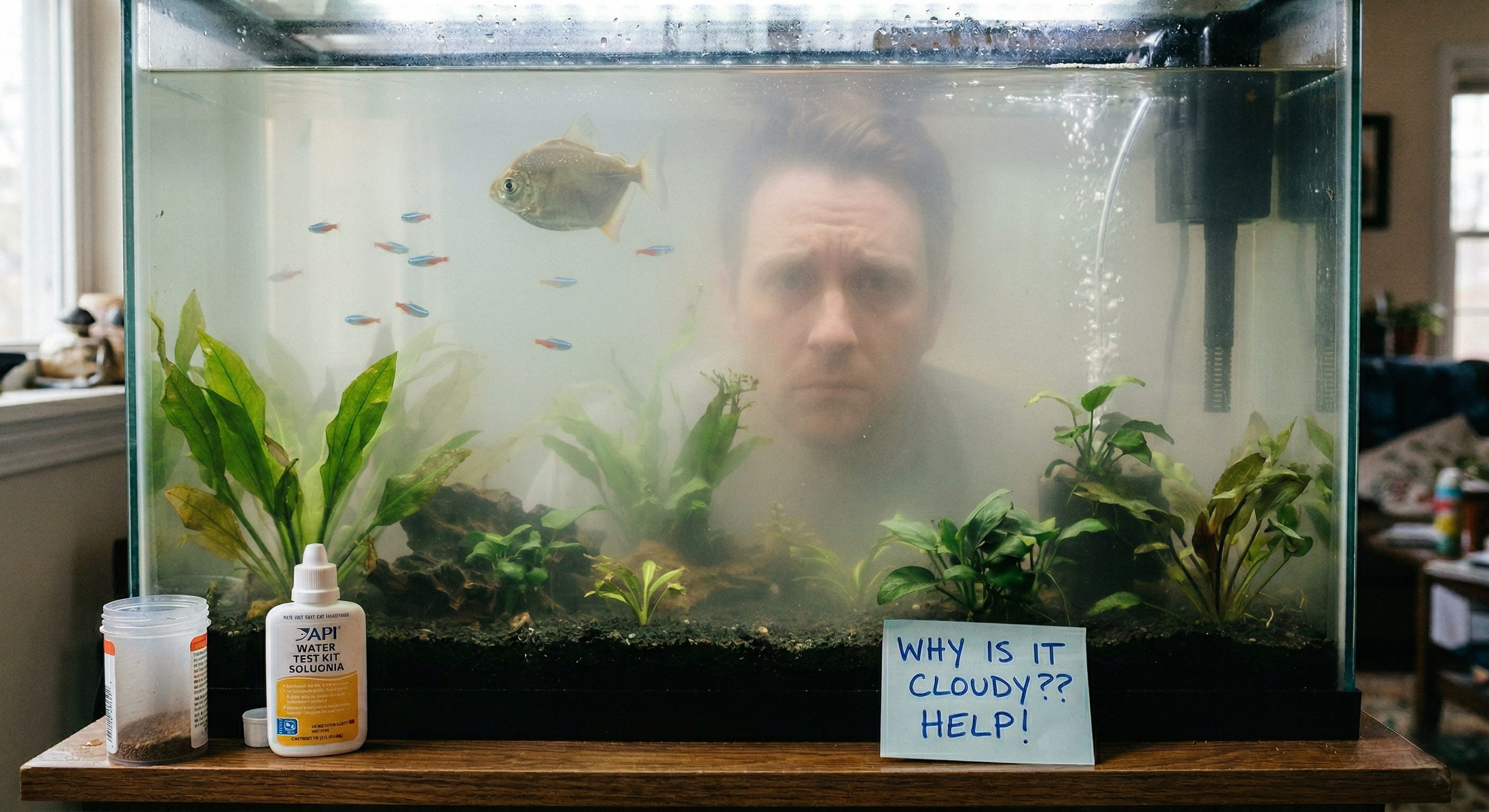

If your fish tank is cloudy, the water color indicates the specific issue: white or milky water is caused by a bacterial bloom (often in new tanks), green water signifies an algae bloom due to excess light or nutrients, and brown or dusty water is the result of unwashed substrate or debris.To fix this, you must match the solution to the biological or mechanical cause, such as waiting out a bacterial cycle, reducing light for algae, or improving mechanical filtration for suspended debris.
Also Read: Top Rated Aquarium Water Clarifiers & Beneficial Bacteria on Amazon
| ✓Our Pick |
Aquarium water clarifier — quickly clears cloudy, green, or milky fish tank water without harming fish Used by over 10,000 satisfied customers — an easy, affordable option you can start using today. See on Amazon → |
Bacterial blooms, algae overgrowth, and particulate matter are the three primary reasons aquarium water becomes visually compromised. Identifying the specific color of the cloudiness determines the exact biological or mechanical failure occurring within the aquatic environment.
White, hazy water is almost exclusively tied to a bacterial bloom, a phenomenon incredibly common in newly established aquariums. When a tank is newly set up, the beneficial, autotrophic bacteria required to process fish waste have not yet colonized the filter media and substrate to sufficient levels.
"This condition is caused by a lack of biological filtration, and it can take four to six weeks to build your fish tank's biological bacteria to a level where they can handle your fish's waste." (Carey Manzolillo at Chewy)
During this initial cycling period, heterotrophic bacteria multiply rapidly in the water column to consume excess organic waste, creating a dense, milky appearance. This is a natural, unavoidable phase of the nitrogen cycle. Adding chemical water conditioners or aggressively changing the water during this phase often exacerbates the issue by introducing new minerals and nutrients that inadvertently feed the ongoing bloom.
Also Read: How To Fix Cloudy Water in a New Fish Tank - Aqueon
Green cloudiness is caused by suspended single-celled phytoplankton reproducing exponentially in the water column. Unlike the stationary algae that coats aquarium glass or decorations, this free-floating type thrives when two distinct environmental conditions are met simultaneously: excessive lighting and a surplus of dissolved nutrients, primarily phosphates and nitrates.
"If your tank has green cloudy water indicating an algae bloom, remove it from direct sunlight and ensure your aquarium is receiving the proper amount of light for your specific fish and habitat." (Carey Manzolillo at Chewy)
Overfeeding is a direct and frequent contributor to this nutrient surplus in home aquariums. When uneaten fish food breaks down at the bottom of the tank, it creates a phosphate-rich environment that acts as high-octane fuel for floating algae cells, triggering a massive green bloom.
Brown, yellow, or grey water is generally a mechanical filtration issue or the result of dissolved organic compounds. Unwashed gravel or sand will release microscopic silica and dust particles that stay stubbornly suspended in the water for days if the filtration flow is inadequate. Alternatively, natural aquarium botanicals and driftwood release organic tannins into the water, staining it a tea-like brown color. While tannins are biologically harmless and even physically beneficial for specific blackwater fish species, fine substrate dust can severely irritate fish gills if not rapidly filtered out of the water column.
| ✓Quick Fix |
The Fastest Fix People Try for This Many readers dealing with this exact issue start with something like this before trying anything else. See on Amazon → |
Resolving cloudy water requires precise, targeted interventions based on the water's appearance and the tank's age. Applying chemical clarifiers to an algae bloom or executing a massive water change during a bacterial bloom can destabilize the nitrogen cycle and restart the entire clouding process.
| Water Appearance | Primary Biological/Mechanical Cause | Recommended Solution Protocol | Estimated Resolution Time |
| White / Milky | Bacterial Bloom (New Tank Syndrome) | Do nothing; wait for the nitrogen cycle to establish beneficial bacteria naturally. | 1 to 2 weeks |
| Green / Pea Soup | Algae Bloom (Excess Light and Nutrients) | Reduce lighting to 8 hours daily; limit feeding; install a UV sterilizer. | 3 to 7 days |
| Brown / Yellow | Tannins from driftwood or dissolved organics | Insert activated carbon in the filter path; perform consistent 20% water changes. | 24 to 48 hours |
| Grey / Dusty | Unwashed substrate or aggressively stirred debris | Add fine filter floss to the mechanical filter block; reduce outflow agitation. | 12 to 24 hours |
While bacterial blooms are expected and normal in brand-new tanks, their sudden appearance in a mature, established tank indicates a critically disrupted ecosystem. This is frequently triggered by over-cleaning the filter components, such as washing porous bio-media under chlorinated tap water, which instantly eradicates the beneficial bacteria colonies.
"The most common mistake people make when trying to fix cloudy water is to perform a partial water change." (Aquacadabra Content Team at Aquacadabra)
If a bacterial bloom occurs in an older setup, aquarists must test the ammonia and nitrite parameters immediately. Temporarily halt all feeding schedules to reduce the bio-load and allow the weakened bacterial populations the time and oxygen necessary to restabilize naturally without additional waste input.
Suspended green algae cannot be effectively removed by standard mechanical sponge filtration because the individual cells are entirely microscopic. To permanently eradicate green water, the aquarist must systematically eliminate the algae's primary food and energy sources.
When setting up a new tank utilizing sand or fine-grain gravel, failing to rinse the substrate thoroughly in a separate bucket will result in a localized, grey dust storm. The mechanical filtration system will eventually process this particulate matter, but the clearance time can be dramatically expedited through manual intervention.
"No matter what type of substrate you use in your tank, be it gravel, sand or planting material, ALWAYS rinse it before adding it to your tank." (Dr. Jessie Sanders at Aquatic Veterinary Services)
To clear physical particulate matter swiftly, pack the uppermost tray of the aquarium filter with fine poly-fill wool or specialized water polishing pads. These tightly woven synthetic materials trap micro-particles that bypass standard sponges. Because these dense materials clog rapidly under heavy dust loads, they must be inspected and replaced every 24 hours until the tank water runs completely clear. Furthermore, ensure that powerful filter outflows or internal wavemakers are not pointed directly downward at the substrate, which perpetually kicks up settled debris.
Long-term water clarity relies entirely on maintaining stable water parameters and executing consistent, moderate maintenance routines. Sudden, drastic shifts in the biological load, water temperature, or chemical composition will inevitably trigger a cloudy biological response as the microorganisms scramble to adapt.
The "bio-load" refers to the total volume of organic waste produced by the tank's inhabitants, including respiration, feces, and decaying matter. Overstocking an aquarium with too many fish or overfeeding the existing livestock are the two absolute fastest ways to overwhelm the biological filtration capacity.
"If you feed your fish too much, the uneaten food will sink to the bottom. As this food breaks down, nutrients are released that support the growth of bacteria and algae , which results in cloudy water." (Waterdrop Team at Waterdrop)
Aquarists must adhere to feeding protocols strictly: only offer exactly as much high-quality food as the fish can completely consume within two to three minutes, precisely once per day. Fasting adult fish for one full day per week can also aid in clearing their digestive tracts and reducing the overall organic waste output, subsequently stabilizing the water column over the long term.
A robust, resilient filtration system must seamlessly incorporate three distinct stages of water processing: mechanical, chemical, and biological. Mechanical filtration utilizes coarse sponges and fine filter floss to physically capture floating debris before it has the opportunity to rot. Chemical filtration relies on activated carbon or synthetic resins to absorb dissolved organic compounds, errant medications, and wood tannins that discolor the water. Biological filtration utilizes highly porous ceramic rings or sintered glass nodes to house the critical beneficial bacteria necessary to process highly toxic ammonia into significantly less harmful nitrates.
Routine maintenance protocols should never involve changing all three filter media stages simultaneously. Aquarists must only rinse mechanical sponges in siphoned, dechlorinated tank water—never straight tap water—and systematically replace chemical media on a monthly basis. Biological media should rarely, if ever, be scrubbed or replaced, as it functions as the central life support system of the entire enclosed ecosystem.
For highly sensitive fish species or for hobbyists located in municipalities with exceptionally poor tap water quality, utilizing Reverse Osmosis (RO) water provides a pristine, chemical-free blank slate. Standard tap water frequently contains heavy metals, chlorine, chloramines, and fluctuating mineral profiles that can inadvertently cause mineral precipitation or cloudy chemical reactions when mixed with commercial aquarium buffers. By processing source water through an RO unit and intentionally re-mineralizing it to exact target parameters, the aquarist maintains absolute, empirical control over the water chemistry, significantly mitigating the likelihood of unexpected chemical cloudiness.
Cloudy aquarium water is fundamentally a visual symptom of an underlying biological or mechanical imbalance within the tank's ecosystem. White water strongly indicates a bacterial bloom often associated with new tanks establishing their nitrogen cycle; green water points directly to suspended phytoplankton driven by an excess of light and nutrient pollution; and brown or dusty water is mechanically caused by unwashed substrate or organic tannins leaching from decor. Successfully and permanently clearing the water requires accurately diagnosing the color, adjusting daily feeding and lighting schedules, avoiding impulsive water changes during biological blooms, and ensuring the filtration system is appropriately scaled for the specific bio-load.
Understanding the nuances of cloudy aquarium water can save both new and veteran hobbyists significant frustration. Below are answers to the most common concerns regarding murky fish tank conditions.
Will cloudy water kill my fish?
Cloudy water itself is not inherently lethal or directly dangerous to fish gill function unless it is dense particulate matter. However, if the cloudiness is a white bacterial bloom caused by un-processed fish waste, the underlying, invisible ammonia or nitrite spikes causing the bloom are highly toxic and can be fatal.
Should I do a large water change if my fish tank becomes cloudy?
If the cloudiness is milky white (indicating a bacterial bloom), avoid water changes completely, as introducing fresh tap water provides new trace minerals that will feed the bacteria and prolong the bloom indefinitely. Conversely, if the cloudiness is green (algae) or brown (particulate debris), a targeted 20% to 30% water change can efficiently help dilute the issue, provided the root cause is being addressed simultaneously.
How long does new tank syndrome last before clearing?
The milky bacterial bloom closely associated with a new, uncycled tank typically clears entirely on its own within one to two weeks. This rapid resolution relies on the tank being left completely undisturbed so the biological filter media can process the available nutrients and stabilize naturally.
Can I simply use a liquid water clarifier chemical to fix it?
Commercial water clarifiers, also known as flocculants, work by binding microscopic floating particles together until they are large enough for the mechanical filter pad to trap them. They are highly effective for clearing particulate dust or lingering suspended algae but are entirely ineffective against active bacterial blooms and do nothing to correct the root chemical imbalance causing the issue.
Reviewed and Updated on June 20, 2026 by George Wright