
Health
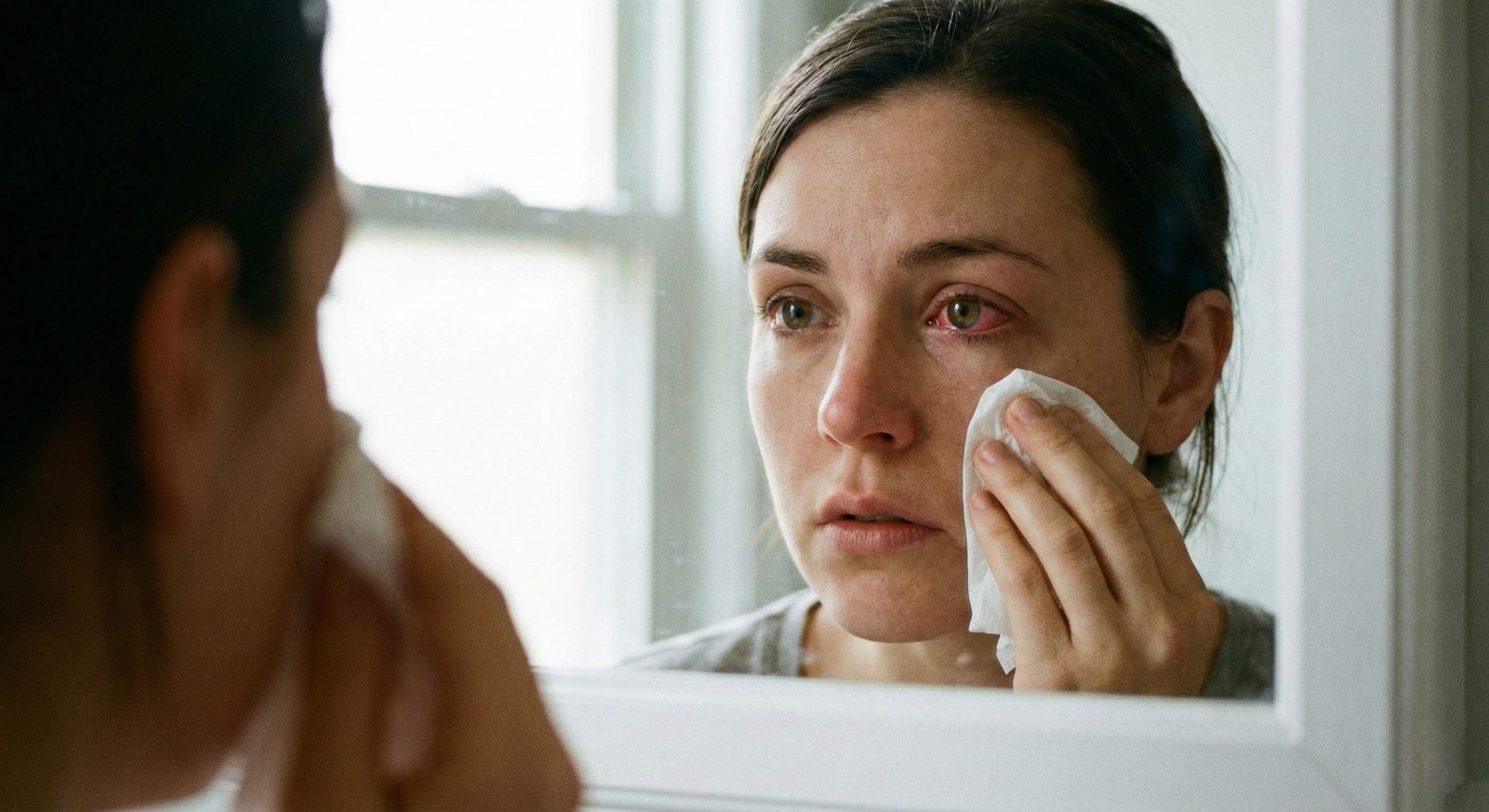

Your eye is red because the tiny blood vessels on the surface of your sclera (the white part of the eye) have expanded or become inflamed. This is most commonly caused by harmless factors like dry eyes, allergies, conjunctivitis (pink eye), or a broken blood vessel, though any redness accompanied by pain or vision changes requires an immediate medical evaluation.Waking up to find your eyes looking like a roadmap of red lines can be alarming. However, in the vast majority of cases, a bloodshot eye is your body's natural response to a minor environmental irritant or a superficial infection. When the conjunctiva—the clear membrane covering your eye—encounters an irritant, the microscopic blood vessels dilate to deliver nutrients and white blood cells to the area. This dilation transforms the normally white canvas of your eye into a pink or red surface.
Also Read: Top-Rated Soothing Artificial Tears on Amazon
| ✓Our Pick |
Contact lenses with free next-day delivery — replace yours if symptoms persist Great value for money — this product tackles the root cause rather than just masking the symptoms. Learn More → |
Understanding the root cause of ocular redness is the first step toward finding lasting relief. The modern environment heavily taxes our vision, making bloodshot eyes an increasingly frequent complaint in optometry clinics.
The most frequent culprits behind a painless red eye include dry eye syndrome, allergic reactions, viral or bacterial conjunctivitis, and subconjunctival hemorrhages.
One of the most pervasive reasons for red eyes in 2026 is dry eye syndrome, largely driven by excessive screen time. When staring at digital devices, the human blink rate drops significantly. This lack of blinking prevents the eye from distributing its natural tear film, leading to rapid evaporation. The resulting friction causes the blood vessels to swell in protest, leaving the eyes looking red and feeling gritty.
Conjunctivitis occurs when a virus, bacteria, or allergen explicitly inflames the conjunctiva. Viral and bacterial pink eye are highly contagious and are usually accompanied by a watery or thick, crusty discharge. Allergic conjunctivitis, on the other hand, is not contagious and is triggered when the immune system releases histamine in response to pollen, dust mites, or pet dander.
If you notice a sudden, bright red, sharply defined patch on the white of your eye, you likely have a subconjunctival hemorrhage. While it looks like a prop from a horror movie, it is simply a harmless broken blood vessel. It can be triggered by a heavy cough, a violent sneeze, straining during heavy lifting, or simply rubbing your eye too aggressively.
"Most people don't even notice them. Their friends or family members notice, usually right after the person wakes up. It's like a little bruise on the eye. And it often appears worse before it gets better." — Dr. Richard Hwang at Cleveland Clinic
To quickly identify your specific symptoms, refer to this structural breakdown:
| Condition | Primary Identifying Symptoms | Common Triggers | Contagious? |
| Dry Eye Syndrome | Redness, gritty feeling, burning sensation | Screen time, dry indoor air, aging | No |
| Pink Eye (Infectious) | Pink/red tint, thick discharge, swollen lids | Adenovirus, staph bacteria | Yes (Highly) |
| Subconjunctival Hemorrhage | Bright red patch, completely painless | Coughing, heavy lifting, eye rubbing | No |
| Allergic Conjunctivitis | Redness, intense itching, excessive watering | Pollen, pet dander, dust mites | No |
While a painless red eye is usually benign, the introduction of physical pain changes the diagnostic landscape entirely. Discomfort combined with redness signals that deeper, more critical ocular structures may be under acute distress.
TL;DR: A red eye accompanied by pain, severe light sensitivity, or vision changes often points to vision-threatening conditions like iritis, corneal ulcers, or acute angle-closure glaucoma, which require emergency intervention.
Iritis is the inflammation of the iris (the colored part of your eye) and is a specific type of anterior uveitis. Unlike the widespread pinkness of conjunctivitis, iritis often presents as a concentrated red ring around the iris itself. It makes the eye deeply painful and highly sensitive to light. Iritis is often an autoimmune response, meaning your body's immune system is mistakenly attacking healthy eye tissue.
"When you have uveitis, you're more likely to have a red circle around your iris, not widespread pink throughout your eye." — Dr. Williamson at Cleveland Clinic
The cornea is the clear, protective dome at the front of your eye. If it becomes scratched (a corneal abrasion) by a foreign object, a fingernail, or a damaged contact lens, the eye will immediately turn red, water profusely, and hurt every time you blink. If bacteria enter this scratch, it can develop into a severe infection known as a corneal ulcer, which requires immediate antibiotic drops to prevent permanent scarring.
Acute angle-closure glaucoma is a medical emergency. It occurs when the fluid inside the eye cannot drain properly, causing a sudden and massive spike in intraocular pressure. This rapid pressure build-up directly compresses the optic nerve. Symptoms include a violently red eye, agonizing pain, blurry vision, and often nausea or vomiting.
Treating a bloodshot eye effectively depends entirely on properly identifying the underlying environmental or biological trigger. Applying the wrong over-the-counter treatment can occasionally worsen the condition and unnecessarily prolong your discomfort.
TL;DR: Mild redness from dry eyes or allergies can be safely managed at home with preservative-free artificial tears, while infections or painful redness necessitate a visit to an optometrist or ophthalmologist for prescription care.
If your red eye is painless and simply feels a bit tired or dry, home management is highly effective. Keep in mind that when comparing standard artificial tears to heavily marketed "redness-relieving" drops, artificial tears are a much better fit for long-term ocular health. Redness relievers constrict blood vessels for a temporary cosmetic fix but can cause a "rebound effect," making the redness worse once the medication wears off.
Eye health is not an area where you want to take risks. You should bypass home remedies and immediately seek the expertise of an eye care professional if you experience any of the following clinical red flags:
Also Read: How to Soothe Eyelid Inflammation Naturally
Patients frequently present with highly specific, situational concerns regarding their daily eye health. Addressing these common, long-tail queries helps demystify sudden ocular symptoms and guides proper at-home care.
TL;DR: Morning redness is usually tied to nocturnal dryness or allergens, while long-lasting redness points to chronic dry eye syndrome or persistent environmental irritants.
Reviewed and Updated on February 27, 2026 by George Wright