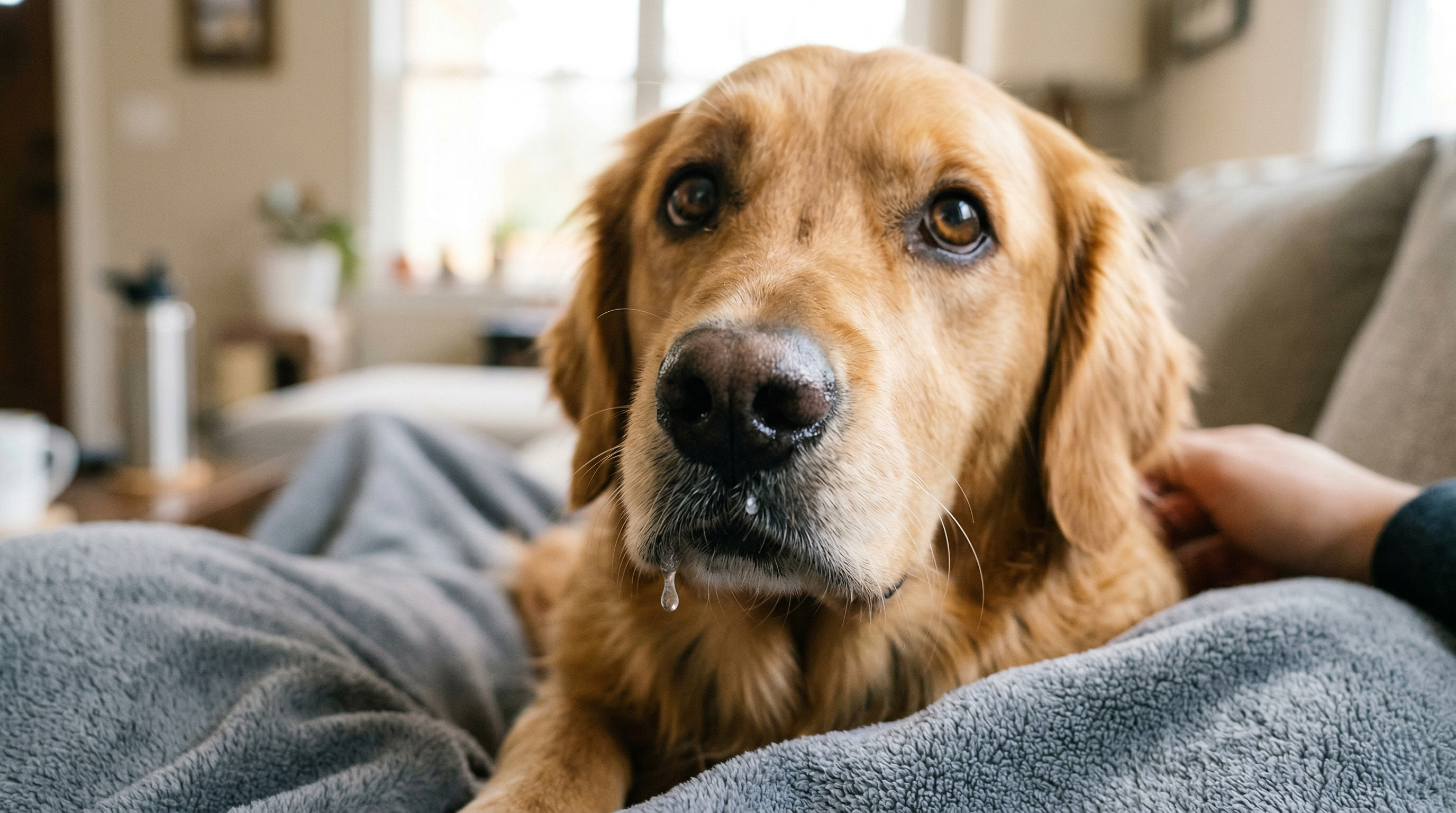
Your dog’s nose is running because of irritation, inflammation, or infection within the nasal passages, a condition medically known as rhinorrhea. While occasional clear discharge can simply be a result of your dog regulating their body temperature, persistent or discolored discharge often signals underlying issues like allergies, viral infections, or foreign objects.Canine Nasal Discharge
If you are wondering "why is my dog's nose running," the answer depends almost entirely on the color, consistency, and duration of the fluid. Clear, watery discharge is usually benign or allergy-related, while thick, yellow, green, or bloody discharge requires a veterinary consultation to rule out serious infections or tumors.
"Nasal discharge in dogs, medically known as rhinorrhea, is a common issue that manifests independently or as a sign of health problems."
— Total.vet Editorial Team, Total.vet
Also Read: Best Soothing Dog Balms and Nasal Care Products on Amazon
Understanding Discharge Colors and What They Mean
To identify why your dog’s nose is running, you must first look at what is actually coming out. The consistency of the fluid acts as a primary diagnostic clue for both owners and veterinarians.
- Clear and Watery: This is the most common type and often indicates mild seasonal allergies, environmental irritants like dust, or even simple excitement.
- Cloudy or Milky: This transition often suggests the early stages of an infection or significant inflammation within the nasal lining.
- Yellow or Green: This is a hallmark of a bacterial or fungal infection, often requiring antibiotics or specialized antifungal therapy.
- Bloody (Epistaxis): This can be a sign of physical trauma, dental root abscesses, clotting disorders, or nasal tumors and should be treated as an emergency.
Comparison of Dog Nasal Discharge Types
| Discharge Type |
Likely Cause |
Urgency Level |
| Clear/Watery |
Allergies, Irritants, Heat |
Low (Monitor) |
| Yellow/Green |
Bacterial/Fungal Infection |
Moderate (See Vet) |
| Bloody |
Trauma, Tumors, Dental |
High (Immediate) |
| One-sided (Unilateral) |
Foreign Object, Polyp |
Moderate (See Vet) |
| ✓Our Pick |
Petcube Emergency Fund — 24/7 vet access + $3,000 emergency coverage for your pet Trusted by professionals and everyday users alike — a smart investment that pays for itself. Learn More → |
Common Causes of a Runny Nose in Dogs
Dogs use their noses to explore the world, making them susceptible to a wide range of environmental and biological triggers.
1. Environmental Allergies and Irritants
Just like humans, dogs suffer from allergic rhinitis caused by pollen, dust mites, mold, and even certain household chemicals like perfumes or cigarette smoke. These allergens cause the nasal passages to become inflamed, triggering excessive mucus production.
"Allergic rhinitis or sinusitis occurs seasonally in association with pollen production, and year-round, probably in association with house dusts and molds."
— MSD Veterinary Manual, MSD Veterinary Manual
Also Read: Why Is My Dog Coughing?
2. Respiratory Infections
Viral infections such as canine distemper, parainfluenza, and "kennel cough" (Bordetella) are frequent culprits. While viruses cannot be treated with antibiotics, secondary bacterial infections often move in afterward, turning clear discharge into thick, foul-smelling pus.
3. Foreign Objects
If your dog's nose is running only from one nostril, they may have inhaled a foreign object. Items like grass seeds, wood splinters, or small bits of plastic can become lodged, causing intense irritation, sneezing, and localized discharge.
| ✓Our Pick |
Nextrition Pet — Premium Science-Backed Dog & Cat Food High-quality nutrition to support digestion, coat health, and energy. May offer: New customers get 20% off with code GARDEN26_20. Returning customers get 15% off with code GARDEN26_15. Expires May 31, 2026. Full-size bags only. 🏷New customers: GARDEN26_20 (20% off) — Returning customers: GARDEN26_15 (15% off) — expires May 31 Learn More → |
Breed Predispositions and Anatomy
Not all dogs are built the same, and their skull shape significantly impacts their nasal health. Certain breeds are naturally more prone to "drippy" noses due to their physical structure.
Brachycephalic (Flat-Faced) Breeds
Breeds like Bulldogs, Pugs, and Boxers have shortened nasal passages. These cramped spaces are more susceptible to blockages, infections, and inflammation caused by air pollution.
Dolichocephalic (Long-Nosed) Breeds
Collies, German Shepherds, and Greyhounds have a larger internal surface area. This extra space allows more allergens to stick to the nasal lining, increasing the risk of allergic rhinitis and fungal infections like Aspergillosis.
Also Read: Why Is My Dog Panting So Much?
When to Seek Veterinary Care
While a minor sniffle might clear up on its own, certain "red flag" symptoms indicate that the underlying cause is more than just a dusty room. You should call your vet if the runny nose is accompanied by lethargy, loss of appetite, or labored breathing.
| 🐾Find a Vet |
Find a specialist vet near you VetClinic.info is a free directory of board-certified specialist vets across the US — find an orthopedic surgeon, oncologist, neurologist, or emergency clinic near you in seconds. Find Near You → |
"If your dog's runny nose is accompanied by other symptoms such as itching or skin irritations, allergies might be the culprit."
— Providence Veterinary Hospital, Providence Veterinary Hospital & Clinic
Diagnostic Steps for Persistent Issues
- Physical Exam: Checking for dental issues or visible obstructions.
- Swabs and Cultures: Identifying specific bacteria or fungi.
- Imaging: X-rays or CT scans to look for tumors or deep foreign bodies.
- Rhinoscopy: Using a small camera to see inside the nasal passages.
Summary of Key Points
- Clear discharge is usually related to allergies, irritants, or temperature regulation.
- Thick yellow or green discharge typically points to a bacterial or fungal infection.
- One-sided discharge is a strong indicator of a foreign object or a localized growth like a polyp.
- Bloody discharge requires immediate veterinary attention as it can signal trauma or serious systemic disease.
What You May Want To Know Additionally
Can dogs get a runny nose from stress?
No, according to veterinary experts, nasal discharge is a clinical symptom of disease or irritation and is not directly linked to emotional stress.
What home remedies can help a dog's runny nose?
Using a humidifier can help ease congestion, and keeping your dog's environment free of smoke and strong perfumes can reduce irritation. However, you should never administer human cold medications without a vet's approval.
Why is my dog's nose running only on one side?
Unilateral (one-sided) discharge often suggests a specific localized problem, such as a foreign object (like a blade of grass), a dental abscess on that side of the mouth, or a nasal tumor.
Reviewed and Updated on April 6, 2026 by George Wright