Sleep
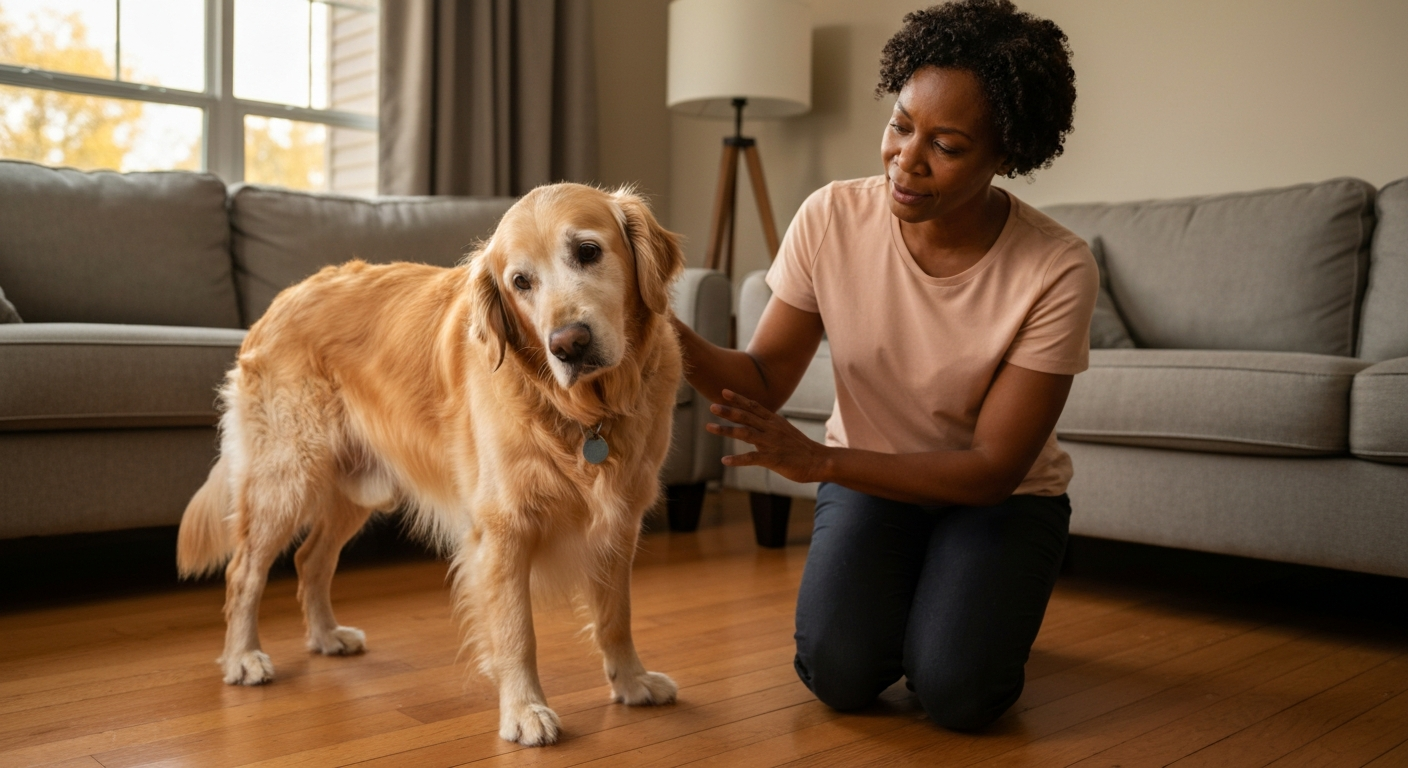

A dog leaning or walking to one side typically signals a vestibular system problem, inner ear infection, stroke, or neurological condition that requires prompt veterinary attention. When your dog suddenly tilts their head, loses balance, or drifts sideways while walking, their brain is receiving incorrect signals about body position and spatial orientation. While some causes are treatable and temporary, others indicate serious conditions that worsen without intervention.
| ✓Our Pick |
$3,000 emergency vet fund with 24/7 online vet access Used by over 10,000 satisfied customers — an easy, affordable option you can start using today. Learn More → |
Dogs lean to one side when their vestibular system—the inner ear and brain structures that control balance—sends faulty signals about where their body is in space.
The vestibular system works like an internal gyroscope. It tells your dog which way is up, helps them walk in a straight line, and coordinates eye movements with head position. When something disrupts this system, your dog's brain receives conflicting information. They feel like the world is spinning or tilting, so they compensate by leaning toward what feels like "down" to them.
This explains why affected dogs often walk in circles, fall toward one side, or seem drunk and disoriented. Their muscles work fine—the problem is the navigation system giving them wrong directions.
Vestibular disease is the most common reason dogs suddenly lean to one side, especially in older dogs where it's called "old dog vestibular syndrome" or idiopathic vestibular disease.
This condition affects the peripheral vestibular system (inner ear and nerve) rather than the brain itself. Symptoms appear suddenly—often overnight—and include:
"Idiopathic vestibular disease is one of the most common neurological presentations in older dogs. While it looks alarming, most dogs begin to improve within 72 hours and recover substantially within two to three weeks." — Dr. Curtis Dewey at Cornell University College of Veterinary Medicine
The good news: idiopathic vestibular disease often resolves on its own with supportive care. However, your vet needs to rule out other causes first.
Middle and inner ear infections (otitis media and otitis interna) directly irritate the vestibular apparatus, causing dogs to lean toward the infected ear.
Unlike outer ear infections that cause scratching and head shaking, inner ear infections affect balance. Bacteria, yeast, or foreign material can travel from the outer ear canal into deeper structures. Dogs with chronic ear problems, floppy ears, or allergies face higher risk.
Signs that an ear infection has spread to the inner ear:
| Symptom | What It Indicates |
|---|---|
| Head tilt toward one side | Inner ear inflammation on that side |
| Loss of balance | Vestibular nerve irritation |
| Facial nerve paralysis | Drooping lip, inability to blink on one side |
| Horner's syndrome | Constricted pupil, drooping eyelid, sunken eye |
| Pain when opening mouth | Infection near temporomandibular joint |
Treatment requires prescription antibiotics or antifungals, often for 4-6 weeks. Some dogs need ear flushing under anesthesia to clear deep debris.
Strokes do occur in dogs and cause sudden leaning, circling, and loss of balance, though they're less common than vestibular disease.
A stroke happens when blood supply to part of the brain is interrupted (ischemic stroke) or when a blood vessel bleeds into brain tissue (hemorrhagic stroke). Dogs with underlying conditions like kidney disease, heart disease, Cushing's disease, or high blood pressure face elevated stroke risk.
Stroke symptoms often mirror vestibular disease but may include:
"Differentiating a stroke from vestibular disease often requires advanced imaging such as MRI. The treatment and prognosis differ significantly, so accurate diagnosis matters." — Dr. Karen Munana at NC State College of Veterinary Medicine
With proper supportive care, many dogs recover well from strokes, though some experience permanent deficits.
Also Read: Why Is My Dog's Leg Twitching? 9 Causes & When to Worry
Brain tumors affecting the cerebellum or brainstem can cause progressive leaning, circling, and coordination problems that worsen over time.
Unlike the sudden onset of vestibular disease, brain tumor symptoms typically develop gradually. You might notice your dog becoming slightly uncoordinated over weeks or months before obvious leaning appears. Other signs include:
Meningiomas are the most common brain tumor in dogs and often respond to treatment. Diagnosis requires MRI, and options include surgery, radiation, or palliative care depending on tumor type and location.
Certain toxins affect the nervous system and vestibular function, causing dogs to stagger, lean, and lose coordination.
Common culprits include:
If you suspect toxin exposure, contact your vet or ASPCA Animal Poison Control (888-426-4435) immediately. Timing matters—some antidotes only work within a narrow window.
Trauma to the head or neck can damage vestibular structures or cause brain swelling that disrupts balance and coordination.
Even seemingly minor bumps can cause problems if they affect the right area. Dogs hit by cars, those who fall from heights, or those involved in fights may develop vestibular signs hours or days after the initial injury as swelling develops.
Warning signs after any head trauma:
Head trauma requires immediate veterinary evaluation. Internal damage isn't always visible, and delayed treatment worsens outcomes.
Low thyroid function occasionally causes vestibular signs in dogs, though this connection isn't fully understood.
Hypothyroidism more commonly causes weight gain, hair loss, and lethargy. However, some dogs develop peripheral vestibular dysfunction alongside their metabolic symptoms. A simple blood test can check thyroid levels, and treatment with thyroid hormone supplementation is straightforward and affordable.
| ✓Our Pick | ||
Nextrition Pet — Premium Science-Backed Dog & Cat Food High-quality nutrition to support digestion, coat health, and energy.
|
Your vet will perform a neurological examination to determine whether the problem originates in the inner ear (peripheral) or brain (central)—this distinction guides treatment.
| 🐾Find a Vet |
Find a specialist vet near you VetClinic.info is a free directory of board-certified specialist vets across the US — find an orthopedic surgeon, oncologist, neurologist, or emergency clinic near you in seconds. Find Near You → |
Expect your vet to:
| Finding | Suggests Peripheral (Ear) | Suggests Central (Brain) |
|---|---|---|
| Nystagmus direction | Horizontal, always same direction | Vertical or changes direction |
| Head tilt | Toward affected side | May be toward either side |
| Limb weakness | Absent | Often present |
| Mental status | Normal | May be altered |
| Facial paralysis | Possible | Possible |
Depending on findings, your vet may recommend blood work, ear cultures, X-rays, or advanced imaging like MRI or CT scans.
Help your dog stay safe and comfortable while you arrange veterinary care—most causes require professional diagnosis and treatment.
Immediate steps:
| ✓Our Pick |
$3,000 emergency vet fund for unexpected situations like this Highly rated by thousands of buyers — this is one of the most effective solutions for this issue you can try at home. Learn More → |
Seek emergency veterinary care immediately if your dog shows any of these signs alongside leaning.
Rush to an emergency vet if you observe:
For sudden but stable vestibular signs in an otherwise healthy dog, same-day veterinary evaluation is appropriate—you likely don't need the emergency room if your regular vet can see your dog within hours.
Treatment depends entirely on what's causing your dog's balance problems—there's no one-size-fits-all approach.
| Condition | Typical Treatment | Recovery Timeline |
|---|---|---|
| Idiopathic vestibular disease | Supportive care, anti-nausea medication | 1-3 weeks, some residual head tilt possible |
| Ear infection | Antibiotics/antifungals, ear cleaning, pain relief | 4-6 weeks |
| Stroke | Supportive care, treating underlying conditions | Weeks to months, variable |
| Brain tumor | Surgery, radiation, or palliative care | Depends on tumor type |
| Toxin exposure | Decontamination, supportive care, specific antidotes | Hours to days |
| Hypothyroidism | Thyroid hormone supplementation | Weeks to months |
Your vet may prescribe anti-nausea medications like maropitant (Cerenia) or meclizine to keep your dog comfortable while the underlying cause is addressed.
Most dogs with vestibular problems need modified home care during recovery, even with treatment.
Recovery tips that make a difference:
A dog leaning to one side signals that something is disrupting their vestibular system—the inner ear and brain structures that control balance. Vestibular disease, ear infections, strokes, brain tumors, toxins, and head trauma are the most common causes. While idiopathic vestibular disease often resolves with supportive care, other causes require specific treatment. Your vet can distinguish between peripheral (ear) and central (brain) problems through examination and testing. Seek emergency care if your dog has seizures, loses consciousness, or shows rapid deterioration. With proper diagnosis and treatment, many dogs recover well, though some retain a permanent slight head tilt.
Sudden sideways walking, also called crabbing or side-stepping, usually indicates a vestibular problem where your dog's brain is receiving incorrect balance signals. The most common cause in dogs over 8 years old is idiopathic vestibular disease, which appears suddenly but often improves within days. However, ear infections, strokes, and toxin exposure can also cause this symptom. Veterinary evaluation is essential to identify the cause and start appropriate treatment.
Idiopathic vestibular disease, the most common type, typically resolves on its own within 1-3 weeks without specific treatment beyond supportive care. However, vestibular symptoms caused by ear infections require antibiotics, and those caused by brain tumors may need surgery or radiation. The prognosis depends on the underlying cause—many dogs recover fully, while others retain a mild head tilt permanently.
Without advanced imaging like MRI, distinguishing between stroke and vestibular disease is difficult because symptoms overlap significantly. However, strokes more often cause weakness on one side of the body, altered mental status, and seizures. Vestibular disease tends to cause more dramatic eye movements and typically doesn't affect limb strength. Your vet's neurological examination helps narrow down the cause, and MRI provides a definitive answer when needed.
Seek emergency care if your dog's leaning is accompanied by seizures, loss of consciousness, known toxin exposure, recent head trauma, or rapid worsening. For sudden vestibular signs in an otherwise stable dog—meaning they're alert, not having seizures, and not deteriorating rapidly—same-day evaluation at your regular vet is usually appropriate. When in doubt, call your vet or an emergency clinic to describe the symptoms and get guidance.
Most dogs with idiopathic vestibular disease show improvement within 72 hours and substantial recovery within 2-3 weeks. However, some dogs retain a permanent mild head tilt even after full functional recovery. Dogs with vestibular problems caused by ear infections recover as the infection clears, typically over 4-6 weeks of treatment. Recovery from strokes or brain tumors varies widely depending on severity and treatment.
Reviewed and Updated on June 16, 2026 by George Wright