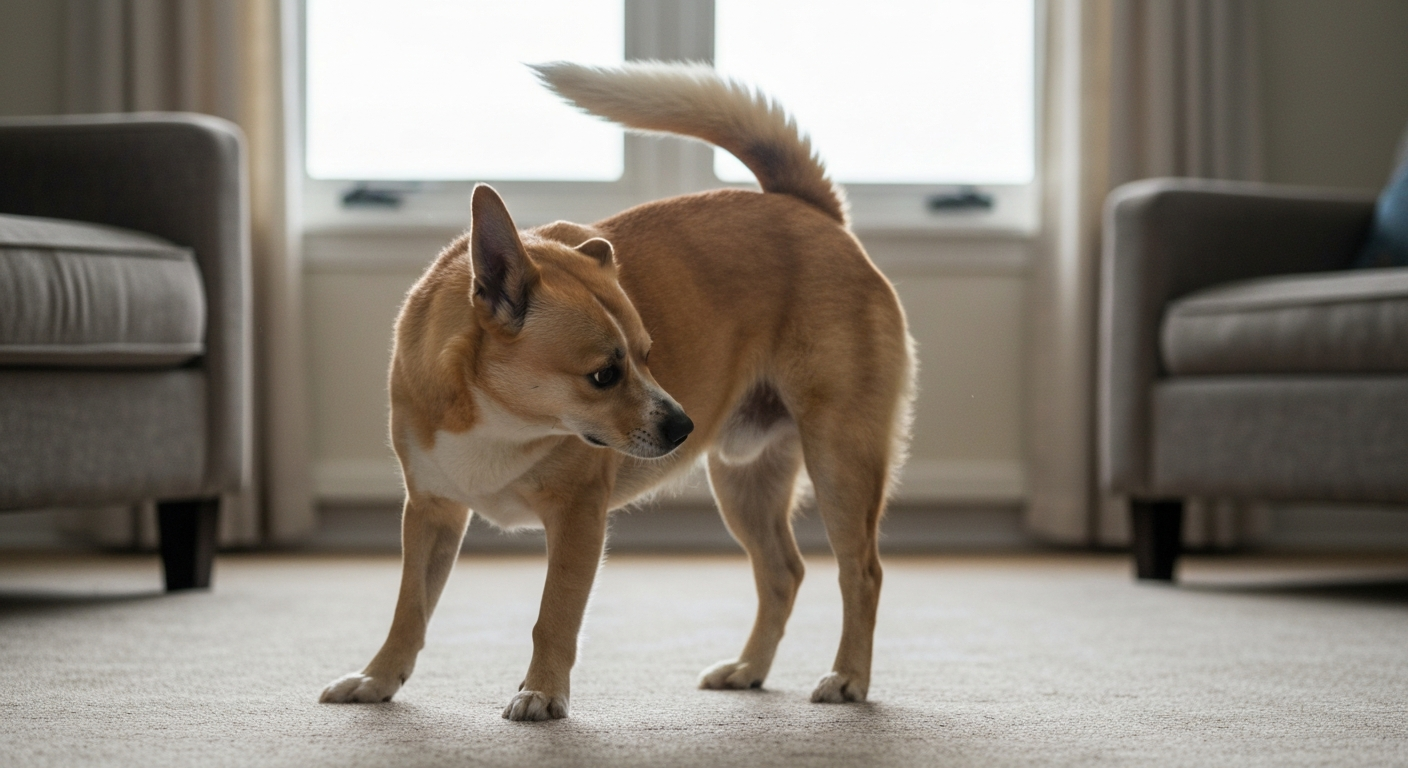
A dog biting or chewing at his tail is most often caused by fleas or other parasites, irritated anal glands, allergies, or anxiety-driven compulsive licking — and the right fix depends entirely on which one is actually behind it.
| ✓Our Pick |
$3,000 emergency vet fund + 24/7 online vet many dog owners keep active for symptoms like this No special skills required — straightforward to use and most orders ship quickly. Learn More → |
Could It Be Fleas or Other Parasites?
Fleas, ticks, and mites are among the most common causes of tail biting, and the base of the tail is a favorite hiding spot for fleas in particular, even on dogs that seem otherwise flea-free.
A veterinarian who covers this symptom regularly explained why fleas are so easy to miss:
"Even if you can't see them, these tiny pests can wreak havoc on your dog's skin, triggering intense itching." — Dr. Chandler Bruening, DVM at Vetnique
Check the base of the tail and the surrounding skin closely for small dark specks (flea dirt) or the fleas themselves. A monthly flea and tick preventive, used consistently rather than only when a problem appears, is the most reliable way to rule this cause out going forward.
Anal Gland Irritation
Impacted or infected anal glands are another very common cause, and dogs experiencing this often scoot, lick at their back end, and bite at the base of the tail all at once.
A veterinarian explained exactly what's happening when the glands are affected:
"When the anal glands become impacted or infected, they cause pressure, itching, and discomfort around the anus." — Dr. Chandler Bruening, DVM at Vetnique
Another veterinarian who treats this regularly described the same pattern from the dog's perspective:
"This can be very irritating to your dog, leading to them licking at their back end a lot." — Dr. Ashley Darby, BVSc at Dogster
A vet can manually express impacted anal glands in a quick office visit, which usually brings fast relief if this turns out to be the cause.
Allergies, Anxiety, or Compulsive Behavior
When fleas and anal gland issues are both ruled out, food or environmental allergies and anxiety-driven compulsive licking are the next most likely explanations, and they call for very different approaches.
Allergic skin irritation tends to cause more generalized itchiness beyond just the tail, while anxiety-driven tail biting is more behavioral in nature:
"Anxious dogs may lick and chew themselves obsessively... some dogs may choose to let their stress out by licking and chewing at their tail and back end." — Dr. Ashley Darby, BVSc at Dogster
In more severe, persistent cases, this behavior can cross into a genuine compulsive disorder:
"Obsessive-compulsive disorders do occur in dogs. These can be severe to the point that a dog will hurt themselves when tail biting is involved." — Dr. Ashley Darby, BVSc at Dogster
More exercise, mental enrichment, and a consistent daily routine help with mild anxiety-driven licking. Tail biting severe enough to cause hair loss, raw skin, or bleeding needs veterinary and possibly behavioral support rather than home management alone.
When to See a Vet
Tail biting that's drawing blood, causing bald patches or open sores, or happening alongside scooting and a strong odor near the tail base all warrant a vet visit rather than continued at-home monitoring.
| 🐾Find a Vet |
Find a specialist vet near you VetClinic.info is a free directory of board-certified specialist vets across the US — find an orthopedic surgeon, oncologist, neurologist, or emergency clinic near you in seconds. Find Near You → |
A vet exam can quickly distinguish between a flea problem, an anal gland issue, an allergy, and a behavioral cause — often through a simple physical exam alone, without needing extensive testing.
What to Do Right Now
Start by checking for fleas at the base of the tail, since it's the fastest cause to rule in or out, and address it directly if you find any signs.
Also Read: Flea and tick treatment many dog owners use as a first check when tail biting starts
If fleas aren't the issue and the biting continues or worsens over a few days, a vet visit is the most efficient next step rather than guessing between an anal gland problem, an allergy, and anxiety on your own.
In Short
A dog biting his tail is most often caused by fleas or other parasites, irritated anal glands, allergies, or anxiety-driven compulsive licking. Checking for fleas first is the fastest way to rule a cause in or out. Tail biting causing hair loss, sores, or bleeding, or happening alongside scooting, needs a vet visit to identify the actual cause and get it treated properly.
What You Also May Want To Know
Why does my dog suddenly bite his tail when he never used to?
A new, sudden onset often points to fleas, an anal gland issue, or a new allergy trigger, rather than a long-standing behavioral habit. Checking the base of the tail for fleas or irritation is a good first step.
Can stress really make my dog chew his tail?
Yes. Anxiety and boredom are well-documented causes of compulsive licking and chewing, including at the tail. More exercise, mental enrichment, and a consistent routine often help with mild cases.
How do I know if it's fleas or an anal gland problem?
Fleas usually cause itching across the skin generally, with visible flea dirt or fleas at the base of the tail. Anal gland issues tend to come with scooting, licking at the back end specifically, and sometimes a noticeable odor.
Will my dog's tail-biting go away on its own?
It depends on the cause. A flea problem resolves once treated; an anal gland issue often needs a vet to manually express the glands. Anxiety-driven biting can persist or worsen without addressing the underlying stress or boredom.
When does tail biting become an emergency?
If it's causing bleeding, open sores, or bald patches, or happening alongside other symptoms like a strong odor or visible swelling near the tail base, it's time to see a vet rather than continuing to monitor at home.
Reviewed and Updated on June 25, 2026 by George Wright