
Health
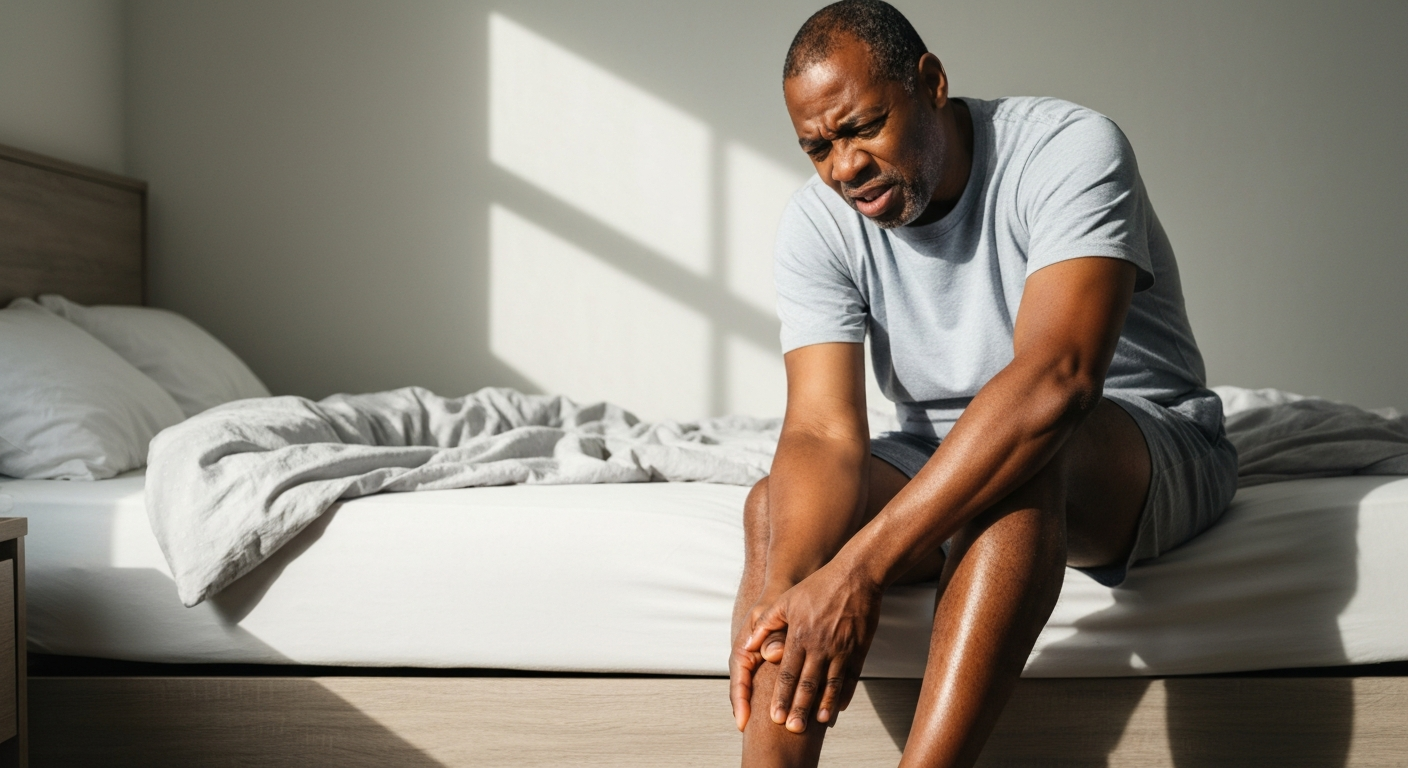

Your calf is most likely tight because the gastrocnemius and soleus muscles—along with the Achilles tendon that connects them to your heel—are either overworked, underused, or responding to biomechanical stress, dehydration, or poor footwear.
Calf tightness is one of the most common lower-leg complaints, affecting everyone from desk workers who sit all day to marathon runners logging serious mileage. The good news is that most causes are fixable once you understand what's actually going on beneath the surface.
Your calf is actually two muscles—the gastrocnemius and the deeper soleus—that merge into the Achilles tendon at your heel, and tightness in any part of this chain creates tension throughout.
The gastrocnemius is the visible, bulging muscle you see when you flex your calf. It crosses both the knee and ankle joints, which makes it particularly vulnerable to tightness when you sit for long periods with bent knees. The soleus sits underneath, attaching only below the knee, and it does most of the work when you're standing or walking slowly.
When either muscle becomes tight, it pulls on the Achilles tendon—the thick band of tissue running down the back of your ankle. This explains why calf tightness and Achilles tendon tightness often occur together. You might feel the discomfort in your calf belly, at the Achilles insertion point near your heel, or both.
Yes—prolonged sitting keeps your calf muscles in a shortened position for hours, causing them to adaptively tighten over time.
When you sit with bent knees, your gastrocnemius stays slack. After eight or more hours a day in this position, the muscle fibers literally shorten. Then, when you stand up and try to walk, the suddenly-lengthened muscle protests with that familiar tightness or even cramping.
Remote work has made this problem worse for many people. If your home office setup means you're barely moving between morning and evening, your calves are paying the price.
Dehydration reduces blood flow to muscles and disrupts electrolyte balance, both of which trigger muscle tightness and cramping.
Your muscles need adequate fluid to contract and relax properly. When you're dehydrated, waste products like lactic acid accumulate faster, and the minerals that regulate muscle function—sodium, potassium, magnesium, and calcium—fall out of balance.
"Muscle cramps are more likely to occur when you exercise in hot weather because you lose more fluids and electrolytes through sweat." — Cleveland Clinic
Many people don't realize they're mildly dehydrated until they notice symptoms like muscle tightness, fatigue, or dark urine. Aim for at least half your body weight in ounces of water daily—more if you're active or sweating.
Absolutely—shoes that have lost their cushioning or support force your calf muscles to work harder with every step, leading to chronic tightness.
Running shoes lose their shock-absorbing capacity after 300–500 miles. When that cushioning degrades, more impact transfers directly to your lower leg. Your calves compensate by staying in a constant state of low-level contraction.
High heels create a different problem. They keep your calf muscles in a shortened position all day, similar to sitting. Women who wear heels regularly often develop chronically tight Achilles tendons because the tendon adapts to the shortened state.
Increasing your running mileage, jumping exercises, or hill work too quickly overwhelms your calf-Achilles complex before it can adapt.
The 10% rule exists for a reason—your tendons adapt more slowly than your cardiovascular system. You might feel ready to run farther or faster, but your Achilles tendon needs 6–12 weeks to strengthen in response to new demands.
| Training Error | How It Causes Tightness |
|---|---|
| Sudden mileage increase | Micro-tears in tendon fibers trigger protective tightening |
| Too many hill repeats | Eccentric loading strains calf-Achilles junction |
| Skipping rest days | No recovery time for tissue repair |
| New high-intensity classes | Unfamiliar jumping patterns stress calves |
"Achilles tendinopathy is typically an overuse injury, often occurring in runners who have suddenly increased their training intensity or duration." — American Academy of Orthopaedic Surgeons
Yes—both extremes of foot arch height alter how force travels through your lower leg, placing extra strain on your calves and Achilles tendon.
Flat feet (overpronation) cause your foot to roll inward excessively when you walk or run. This twisting motion forces your calf muscles to work overtime stabilizing your ankle. Over months and years, this chronic overwork leads to persistent tightness.
High arches create the opposite problem—your feet don't absorb shock well, so more impact transfers up into your calves. People with high arches often have naturally tighter Achilles tendons as well.
Sleep deprivation impairs your body's ability to repair muscle tissue and clear metabolic waste, leaving muscles tight and achy.
During deep sleep, your body releases growth hormone and increases blood flow to muscles for repair. When you consistently get less than seven hours, this recovery process gets shortchanged. You wake up with muscles that feel stiff because they literally haven't finished healing from yesterday's activities.
Also Read: Why Is My Head Pounding? 9 Causes & How to Stop It
Muscle tightness rarely stays isolated—tight hamstrings change your walking gait and shift extra work onto your calves.
Your posterior chain (hamstrings, glutes, and calves) works as an interconnected system. When your hamstrings are chronically tight, they limit how far your leg can swing forward during walking. Your calves compensate by pushing off harder with each step.
This compensation pattern is especially common in people who sit all day. Both the hamstrings and calves tighten from prolonged sitting, creating a feedback loop of increasing tension.
In some cases, calf tightness that comes on with walking and eases with rest can signal peripheral artery disease (PAD), a circulatory condition that reduces blood flow to your legs.
PAD-related calf pain is called intermittent claudication. It typically feels like cramping or tightness that starts after walking a certain distance and goes away within a few minutes of stopping. Unlike muscle tightness from overuse, this pattern is remarkably consistent—the same distance triggers it each time.
Risk factors include smoking, diabetes, high blood pressure, and high cholesterol. If your calf tightness follows this pattern, especially if you're over 50 or have cardiovascular risk factors, see a doctor to rule out PAD.
Deep vein thrombosis (DVT) can cause calf pain and tightness, usually accompanied by swelling, warmth, or skin discoloration—this is a medical emergency.
DVT forms when blood clots develop in the deep veins of your leg. The clot blocks normal blood flow, causing the affected leg to swell and feel tight or crampy. Unlike ordinary muscle tightness, DVT typically affects only one leg and may come with visible swelling or a warm-to-touch sensation.
If you experience sudden calf tightness with swelling, especially after a long flight, surgery, or period of immobility, seek medical attention immediately. Blood clots can travel to your lungs and become life-threatening.
Consistent stretching, foam rolling, and addressing root causes like hydration and footwear will resolve most cases of calf tightness within 2–4 weeks.
Hold each stretch for 30–60 seconds. Research shows shorter holds don't create lasting changes in muscle length.
| Stretch | Target | How to Do It |
|---|---|---|
| Wall calf stretch (straight leg) | Gastrocnemius | Stand facing wall, back leg straight, heel down, lean forward |
| Wall calf stretch (bent knee) | Soleus | Same position but slightly bend back knee |
| Step drop stretch | Achilles tendon | Stand on step edge, lower heels below step level |
| Downward dog | Entire posterior chain | Yoga pose, pedal feet to alternate stretch |
The bent-knee version is crucial because it specifically targets the soleus, which the straight-leg stretch misses. Many people only do straight-leg calf stretches and wonder why their deep calf tightness persists.
Foam rolling works by increasing blood flow and reducing muscle adhesions. Spend 1–2 minutes on each calf, rolling slowly from ankle to knee. When you find a particularly tight spot, pause and hold pressure for 20–30 seconds.
A tennis ball or lacrosse ball works well for more targeted pressure, especially on the Achilles tendon attachment point near your heel. Sit on the floor with your calf resting on the ball and gently roll back and forth.
If your tightness is concentrated in the Achilles tendon, eccentric exercises are the gold standard treatment. Stand on a step with just your forefeet, rise up onto your toes, then slowly lower your heels below step level over 3–5 seconds. Start with 3 sets of 15 repetitions, twice daily.
"Eccentric training has been shown to be effective in treating Achilles tendinopathy, with success rates of up to 90% in some studies." — British Journal of Sports Medicine
Seek medical evaluation if your calf tightness comes with swelling, doesn't improve after 2–4 weeks of home treatment, or follows the pattern of intermittent claudication.
Here are the red flags that warrant a doctor visit:
A sports medicine physician or physical therapist can assess your gait, check for muscle imbalances, and determine if imaging is needed to rule out structural problems.
| ✓Our Pick |
Shop calf compression sleeves and recovery gear This is what many people find solves the problem quickly, without a costly professional visit. See on Amazon → |
Calf tightness usually stems from prolonged sitting, dehydration, overtraining, or poor footwear—all fixable causes. Daily stretching (both straight-leg and bent-knee versions), adequate hydration, and addressing any shoe or training errors will resolve most cases within a few weeks. However, if your tightness comes with swelling, follows a consistent walking-distance pattern, or doesn't improve with home care, see a doctor to rule out circulatory issues or structural problems.
Your Achilles tendon can tighten from inactivity just as much as overactivity. Sitting for long periods keeps the tendon in a shortened position. Over time, the collagen fibers in the tendon adapt to this shorter length, making it feel tight when you finally stretch it. Wearing shoes with elevated heels (even men's dress shoes have a small heel) contributes to this adaptive shortening. Regular stretching, especially eccentric heel drops, can gradually restore normal tendon length.
Morning calf tightness happens because your muscles are essentially "cold" after hours of immobility. During sleep, blood flow to your muscles decreases and metabolic waste products accumulate. Your feet also naturally point downward when lying down, keeping your calves in a shortened position all night. Try doing gentle calf stretches before getting out of bed, and consider sleeping with a pillow under your feet to keep your ankles in a more neutral position.
Yes, tight calves are one of the leading contributors to plantar fasciitis. When your calf muscles and Achilles tendon are tight, they pull on the back of your heel, increasing tension on the plantar fascia—the band of tissue running along the bottom of your foot. Studies show that calf stretching is one of the most effective treatments for plantar fasciitis because it addresses this upstream cause of the problem.
Single-leg calf tightness often points to a biomechanical asymmetry. You might favor one leg when standing, have unequal leg lengths, or have developed compensatory movement patterns from an old injury. It can also indicate an issue specific to that leg, like a developing Achilles tendinopathy or, less commonly, a circulatory problem. If the asymmetry persists despite stretching both legs equally, consider getting a gait analysis from a physical therapist.
Expect 2–4 weeks for noticeable improvement with consistent daily stretching, and 8–12 weeks to fully resolve chronic tightness. Tendons adapt more slowly than muscles, so Achilles tendon tightness takes longer to improve than muscle belly tightness. The key is consistency—five minutes of daily stretching beats an hour-long session once a week. If you're not seeing any improvement after four weeks of dedicated effort, consult a physical therapist to check for underlying issues.
Reviewed and Updated on June 3, 2026 by George Wright