DIY

Your bunny is grinding her teeth either because she's content and relaxed (a soft, quiet purring sound) or because she's in pain or discomfort (a loud, harsh grating noise) — the key difference is the volume and context, and recognizing which type you're hearing is critical for her health.
Rabbits grind their teeth for two completely opposite reasons, and many owners understandably find this confusing. The gentle, barely-audible tooth grinding that happens when you're petting your bunny is a sign of happiness — think of it as a rabbit's version of a cat's purr. But the loud, unmistakable grinding that occurs when your rabbit is hunched over or acting withdrawn signals pain and requires immediate attention. Understanding this distinction could save your rabbit's life.
| ✓Our Pick |
Complete rabbit health care guide and supplies Used by over 10,000 satisfied customers — an easy, affordable option you can start using today. See on Amazon → |
Contented tooth grinding — called tooth purring or bruxing — is soft, rhythmic, and barely audible unless you're close to your bunny.
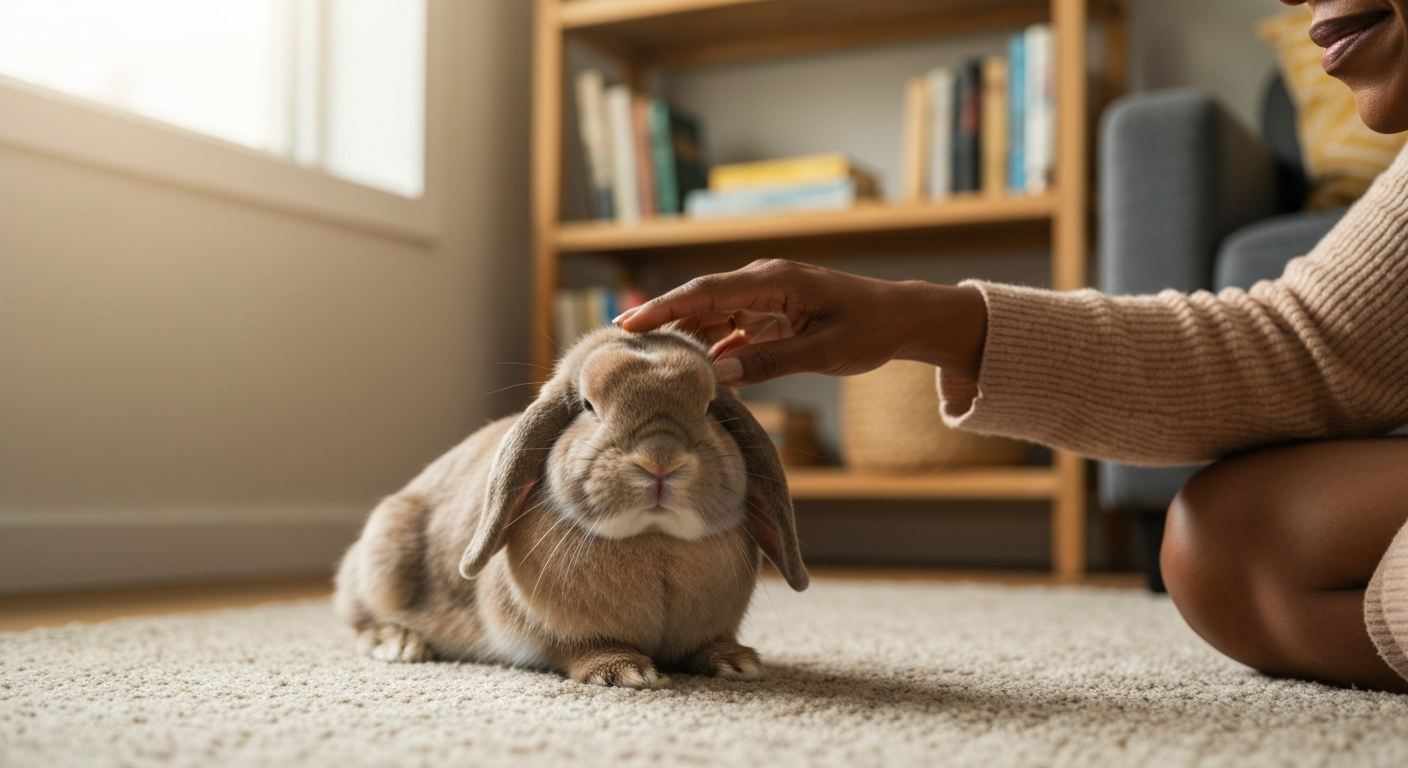
When your rabbit is truly happy, you'll hear a gentle clicking or light chattering sound coming from her teeth. This typically happens during pleasant activities like being stroked on the forehead, lounging in her favorite spot, or settling down for a nap. The sound is so quiet you might feel it through her jaw before you actually hear it.
Happy tooth grinding has several telltale characteristics:
"When rabbits are content, they will often quietly grind their teeth together, producing a soft clicking sound. This is similar to a cat purring and indicates your rabbit is relaxed and happy." — House Rabbit Society
If your bunny grinds her teeth while you're gently rubbing the bridge of her nose or scratching behind her ears, you're doing something right. This is her way of telling you she feels safe and comfortable.
Yes — loud, audible tooth grinding that sounds like bones crunching or grating is a classic sign of pain in rabbits and warrants immediate veterinary evaluation.
Pain grinding (called bruxism) sounds completely different from contentment purring. It's harsh, grating, and often loud enough to hear from across the room. Many owners describe it as similar to someone grinding coffee beans or crunching gravel. This sound indicates your rabbit is experiencing significant discomfort.
Pain grinding typically accompanies other distress signals:
| Pain indicator | What it looks like |
|---|---|
| Body posture | Hunched, pressing belly to ground |
| Eye appearance | Bulging eyes, tight facial muscles |
| Breathing | Rapid or labored |
| Activity level | Unusually still, reluctant to move |
| Appetite | Refusing food or water |
| Droppings | Smaller, fewer, or absent |
"Tooth grinding in rabbits, when loud and persistent, is almost always a sign of pain. Common causes include gastrointestinal stasis, dental disease, urinary problems, or injury. This symptom should never be ignored." — Dr. Dana Krempels, Department of Biology, University of Miami
If your rabbit is grinding loudly and showing any of these signs, contact a rabbit-savvy veterinarian immediately. Rabbits hide illness as a survival instinct, so by the time they show obvious pain signals, they often need urgent care.
The most common causes of pain-related teeth grinding are gastrointestinal problems, dental disease, urinary issues, and injuries — all require professional diagnosis.
Gastrointestinal stasis (GI stasis) is the leading cause of pain grinding in rabbits. This condition occurs when the digestive system slows down or stops moving entirely. Gas builds up in the intestines, causing severe abdominal pain. A rabbit with GI stasis will often sit hunched, grind her teeth loudly, and refuse food.
GI stasis is a medical emergency. Without treatment, it can be fatal within 24-48 hours. If your bunny hasn't eaten or produced droppings in 12 hours and is grinding her teeth, seek emergency veterinary care.
Rabbit teeth grow continuously throughout their lives — approximately 2-3mm per week. When teeth don't wear down properly, they develop sharp spurs that cut into the tongue and cheeks. This causes intense pain and, ironically, more teeth grinding.
Signs of dental problems include:
Dental issues require veterinary intervention. Your vet will examine your rabbit's teeth (including the molars, which you can't see at home) and may need to file or trim them under anesthesia.
Bladder sludge, urinary stones, and urinary tract infections all cause significant pain in rabbits. You might notice your bunny straining to urinate, producing discolored urine, or grinding her teeth while in her litter box.
Any injury or illness causing pain can trigger teeth grinding. This includes muscle strains, arthritis (common in older rabbits), ear infections, and post-surgical discomfort. If the grinding started suddenly, think about whether anything changed recently — a fall, a fight with another rabbit, or exposure to extreme temperatures.
| ✓Our Pick |
Rabbit first aid kit essentials for emergencies One of the highest-rated products in its category — a reliable fix used by thousands of people. See on Amazon → |
A rabbit pulling out her own fur is typically building a nest (if female and pregnant or having a false pregnancy), but it can also indicate stress, boredom, parasites, or hormonal imbalances.
Fur pulling is a separate behavior from teeth grinding, but the two can sometimes occur together in a stressed or unwell rabbit. Understanding why your bunny is pulling out her fur helps you address the root cause.
Female rabbits (does) instinctively pull fur from their dewlap and belly to line their nest before giving birth. This behavior typically begins a day or two before kindling. The fur provides insulation and comfort for newborn kits, who are born hairless and blind.
False pregnancies are surprisingly common in unspayed female rabbits. Hormonal fluctuations can trigger nesting behavior — including aggressive fur pulling — even when no pregnancy exists. A false pregnancy typically lasts 16-18 days and may occur after an encounter with a male rabbit (even without successful mating) or simply due to hormonal cycles.
Rabbits are intelligent, social animals who need mental stimulation. When a rabbit is chronically stressed or bored, she may turn to self-destructive behaviors like excessive grooming and fur pulling. This is sometimes called barbering.
Common stressors include:
External parasites like fur mites (Cheyletiella) and fleas cause intense itching. A rabbit suffering from parasites may pull out fur trying to relieve the irritation. Look for dandruff-like flakes (walking dandruff is a telltale sign of mites), bald patches, redness, or scabs.
Fur mites are highly contagious between rabbits and require veterinary treatment with antiparasitic medication like ivermectin or selamectin.
Bacterial or fungal skin infections, ringworm, and allergies can all cause discomfort that leads to fur pulling. Ringworm typically appears as circular patches of hair loss, while bacterial infections may produce crusty or oozing skin.
Context, volume, and accompanying body language tell you everything you need to know about whether your bunny's teeth grinding is cause for concern or celebration.
| Factor | Contentment grinding | Pain grinding |
|---|---|---|
| Volume | Quiet, barely audible | Loud, clearly audible |
| Sound quality | Soft clicking or purring | Harsh grating or crunching |
| When it happens | During petting, resting, grooming | Randomly, during illness, when hunched |
| Body posture | Relaxed, stretched out, loafed | Hunched, tense, pressing belly down |
| Eyes | Half-closed, relaxed | Wide, bulging, or tightly shut |
| Appetite | Normal | Reduced or absent |
| Duration | Brief, intermittent | Prolonged, continuous |
If you're ever unsure, record the sound on your phone and play it for your veterinarian. A short video showing your rabbit's body language while grinding can be incredibly helpful for diagnosis.
Any loud teeth grinding, especially when combined with changes in eating, pooping, or activity level, requires same-day veterinary attention.
| 🐾Find a Vet |
Find a specialist vet near you VetClinic.info is a free directory of board-certified specialist vets across the US — find an orthopedic surgeon, oncologist, neurologist, or emergency clinic near you in seconds. Find Near You → |
Don't wait and see with a rabbit showing pain symptoms. Their small size and fast metabolism mean conditions deteriorate quickly. A rabbit who seemed fine this morning can be critically ill by evening.
Call your vet immediately if you notice:
Not all vets have extensive rabbit experience. Look for a veterinarian who specializes in exotic animals or has specific training in rabbit medicine. The House Rabbit Society maintains a directory of rabbit-savvy vets.
A proper diet consisting of 80% hay prevents the vast majority of dental problems in pet rabbits.
Rabbit teeth are designed to grind down fibrous vegetation. The side-to-side chewing motion required to process hay naturally files the teeth and keeps them at the correct length. Without enough hay, teeth overgrow and cause painful spurs.
The ideal rabbit diet includes:
Avoid sugary treats, corn, seeds, and large amounts of starchy vegetables like carrots. These don't provide the necessary grinding action and can contribute to obesity and GI problems.
Wooden chew toys and apple branches also help wear down teeth and provide mental enrichment.
Your bunny grinding her teeth is either a sign of pure contentment or a cry for help — and the difference is all in the volume and body language. Soft, quiet grinding during pleasant moments means your rabbit is happy. Loud, harsh grinding with hunched posture, reduced appetite, or changes in droppings signals pain and requires immediate veterinary care. If your rabbit is also pulling out her fur, consider whether she might be pregnant, experiencing a false pregnancy, stressed, bored, or dealing with parasites. When in doubt, always err on the side of caution and contact a rabbit-savvy vet — rabbits hide illness well, and early intervention saves lives.
Unspayed female rabbits commonly experience false pregnancies that trigger nesting behavior, including fur pulling. This happens when hormonal surges mimic pregnancy even though no conception occurred. Other causes include stress, boredom, parasites like fur mites, skin conditions, and over-grooming. If your rabbit is pulling fur and you're certain she's not pregnant, have her examined for parasites and consider whether she has adequate space, enrichment, and social interaction.
Your female rabbit is likely pregnant or experiencing a false pregnancy. Does instinctively pull soft fur from their chest and belly to create a warm, insulated nest for their babies. This behavior typically starts 1-2 days before giving birth. If there's no possibility of pregnancy, a false pregnancy is probable — these usually resolve within 16-18 days. Spaying prevents both actual and false pregnancies and eliminates this behavior.
Compare the sound and the context. A happy purr is soft, rhythmic, and barely audible — it often sounds like quiet clicking and usually happens during petting, grooming, or rest. Pain grinding is loud, harsh, and sounds like grating or crunching. Check your rabbit's body language: relaxed posture with half-closed eyes indicates contentment, while a hunched position with bulging eyes and tense facial muscles indicates pain.
No — teeth grinding itself doesn't damage rabbit teeth because they grow continuously throughout life. However, the underlying cause of pain grinding (such as dental disease with overgrown teeth or spurs) absolutely causes damage and discomfort. If your rabbit is grinding due to dental problems, the teeth themselves need veterinary attention to file down spurs and restore proper alignment.
Occasional soft grinding during sleep is normal and indicates your rabbit feels safe and content enough to fully relax. Think of it as dreaming peacefully. However, if the grinding is loud or your rabbit seems restless rather than deeply asleep, monitor for other pain symptoms. A truly relaxed sleeping rabbit will have floppy ears, a stretched-out or loafed position, and slow, steady breathing.
Reviewed and Updated on May 3, 2026 by George Wright