
Health
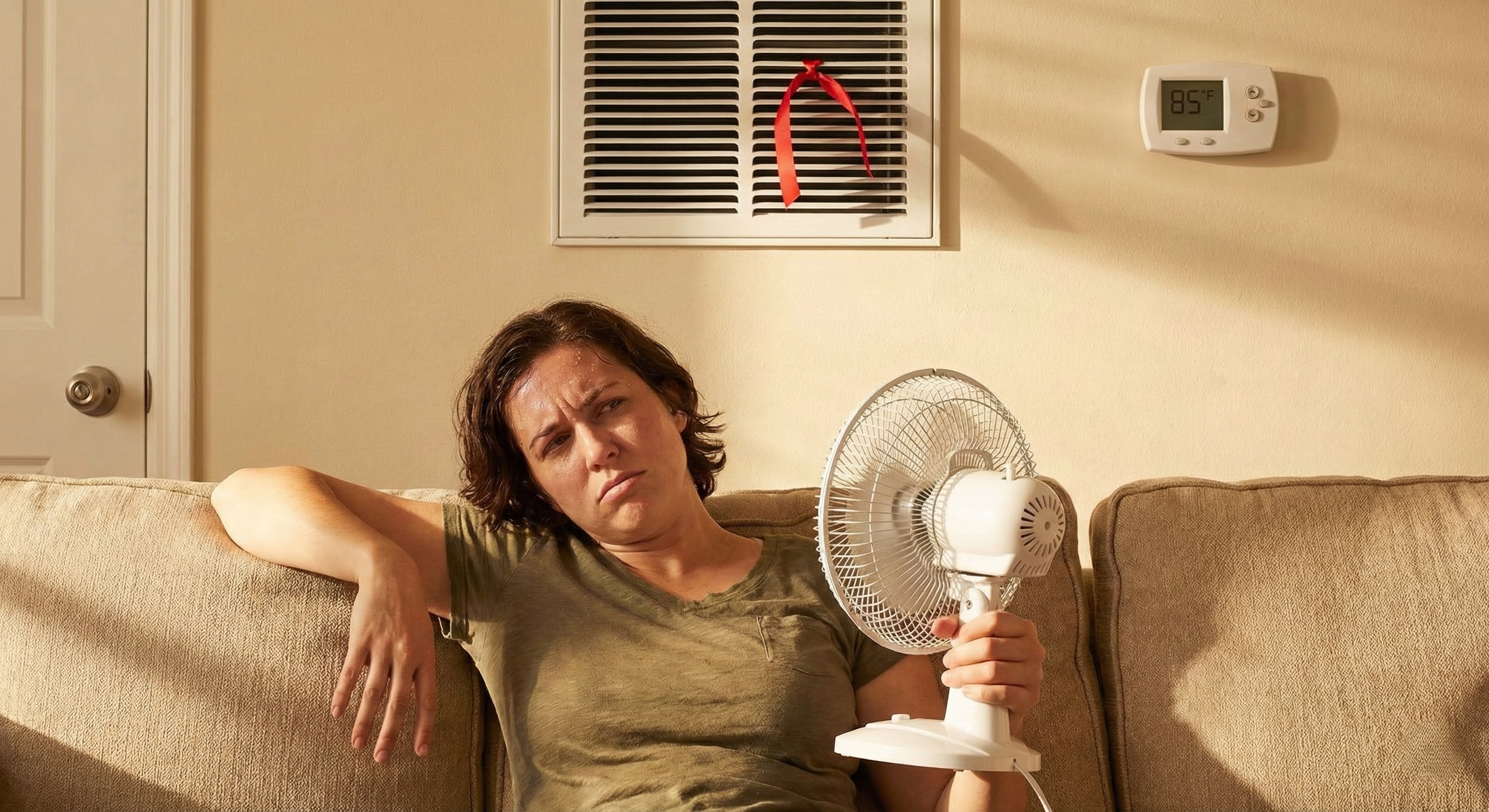

If your AC is running but not blowing cold air, the most common culprit is a restricted airflow caused by a dirty air filter, an incorrectly set thermostat, or a blocked outdoor condenser unit. Resolving these frequent issues often restores cooling immediately without requiring an expensive professional repair.Also Read: Top-Rated Replacement AC Air Filters
A malfunctioning air conditioning unit typically stems from basic airflow restriction, electrical communication faults, or internal refrigerant issues. The table below outlines the primary reasons your system is blowing warm air, the associated physical symptoms, and the immediate recommended fix.
| Cause | Common Symptom | Immediate Solution |
| Dirty Air Filter | Weak airflow from vents | Replace filter immediately |
| Thermostat Error | System runs but air is warm | Set to "Cool" and lower temperature |
| Low Refrigerant | Hissing sounds, ice on coils | Call HVAC professional |
| Blocked Condenser | Outdoor unit is loud/hot | Clear debris around unit |
| Tripped Breaker | System unresponsive | Reset circuit breaker |
A dirty air filter is the number one reason an air conditioning unit stops blowing cold air. When filters become clogged with household dust, pet dander, and debris, they severely restrict the airflow, forcing the air conditioning system to work harder and drastically reducing cooling efficiency.
"If the air filter hasn't been replaced recently, it's possible that the motor shut down since it couldn't suck in sufficient air and overheated." — Brie Greenhalgh and Evelyn Auer via Bob Vila
Air filters are rated by their Minimum Efficiency Reporting Value (MERV). While a higher MERV rating traps smaller particles like pollen, it also creates more resistance to airflow. If your AC system is not designed to handle a restrictive MERV 13 filter, the blower motor will struggle to pull enough air through the return vents. This restricted airflow causes the temperature of the internal evaporator coil to plummet, ultimately freezing the condensation on the coil. Checking your filter once a month during peak summer usage is essential; if you cannot see light passing through the pleats, it is time for a replacement.
Sometimes the issue originates from the thermostat communication rather than the physical AC unit itself. If the thermostat is set to "Fan" instead of "Cool," or if it has lost calibration, it will fail to send the correct low-voltage signal to the compressor to initiate the cooling cycle.
Modern smart thermostats rely on constant Wi-Fi connectivity and internal batteries to regulate indoor temperatures effectively. If a power surge occurs or the batteries deplete, the thermostat may reset to its factory defaults, dropping your personalized cooling schedule. Additionally, the physical location of your thermostat plays a major role in how your AC functions. If the unit is installed in direct sunlight or near a heat-generating appliance, it will read a false high temperature and run the AC constantly. Always verify the fan setting is on "Auto" rather than "On" to ensure the system only blows air when the compressor is actively chilling it.
Also Read: HVAC Thermostat Bypass Tool Kit
Refrigerant is the vital chemical compound that absorbs heat from your indoor air and releases it outside. If your system is low on refrigerant, it means there is a physical leak, and the AC cannot effectively absorb heat to cool the air.
"The refrigerant level may be too low and need to be refilled... The amount of coolant doesn't reduce over time, but if there's a leak, then the system may not have enough to blow cold air into the house." — Brie Greenhalgh and Evelyn Auer via Bob Vila
Air conditioners do not consume refrigerant like a car consumes gasoline; the chemical operates in a permanently closed-loop system. Therefore, if the levels are low, there is an absolute certainty of a leak in the copper lines, the evaporator coil, or the condenser coil. When refrigerant pressure drops, the system cannot absorb sufficient heat from the indoor air. You might notice a faint hissing sound near the outdoor unit or ice building up on the copper lines. Because refrigerants like Puron (R-410A) are tightly regulated greenhouse gases, patching the leak and recharging the system must be handled by licensed HVAC professionals equipped with specialized manifold gauges.
The indoor evaporator coil connects to the outdoor condenser unit via copper refrigerant lines. If airflow is severely restricted by a dirty filter or if the system suffers a refrigerant pressure drop, the natural condensation on these indoor coils can freeze solid.
The evaporator coil, typically housed inside the indoor air handler or attached to the furnace, is a network of copper tubing surrounded by thin aluminum fins. When warm indoor air passes over the chilled coil, moisture is extracted and drained away. However, if the coil's temperature drops below freezing, that moisture turns into a solid block of ice. Running an air conditioner with a frozen coil places immense mechanical strain on the compressor and can lead to total system failure. The safest immediate step is to switch the thermostat from "Cool" to "Off" and turn the fan setting to "On." This blows warm unconditioned air over the ice, safely accelerating the melting process.
Your outdoor condenser unit is responsible for releasing the thermal heat absorbed from your home into the outside air. If this outdoor unit is obstructed by leaves, dirt, or overgrown vegetation, heat transfer cannot occur efficiently, and the system will blow warm air inside.
The outdoor condenser unit houses the primary compressor and a large exhaust fan that dissipates the collected heat. If the aluminum fins on the perimeter of the unit become matted with grass clippings, cottonwood seeds, or dirt, the heat remains trapped inside the system. Consequently, the AC will blow lukewarm air and run continuously, drastically increasing your electricity bill. It is best practice to maintain a clear two-foot perimeter around the entire unit. Once a year, you can turn off the power at the electrical disconnect box and gently wash the condenser fins with a garden hose on a low-pressure setting to restore optimal heat transfer.
Your central air conditioning system relies on an intricate network of supply and return ducts to distribute conditioned air throughout the house. If your system is functioning perfectly but certain rooms feel exceptionally warm or weak in airflow, the issue likely resides in the ductwork itself.
"After being cooled, air must travel through ductwork in order to be distributed through the home. If the AC is blowing warm air, leaky ductwork is a likely candidate." — Brie Greenhalgh and Evelyn Auer via Bob Vila
Air ducts running through unconditioned spaces like attics or crawlspaces are highly vulnerable to extreme temperature fluctuations. If a physical seam separates or a rodent chews a hole in the flexible ducting, the cold air escapes into the attic before it ever reaches your living space. Furthermore, closed or blocked registers in unused rooms disrupt the carefully calculated static pressure of the entire HVAC system. Ensure that at least 80% of your home's vents remain open and unobstructed by heavy rugs or furniture to maintain balanced, cold cooling throughout the property.
While many basic AC issues can be solved with simple DIY maintenance like filter replacements, certain mechanical and chemical problems require specialized tools and certification. Attempting to fix complex electrical or refrigerant issues yourself can be physically dangerous and will likely void your manufacturer warranty.
Here are the specific scenarios that require an expert technician immediately:
Also Read: How Much Does AC Repair Cost in 2026?
Finding the exact reason your air conditioner is blowing warm air can be frustrating, especially during a severe heatwave. Below are straightforward answers to the most common questions homeowners ask when their system unexpectedly stops cooling.
Why is my AC running but not cooling the house? The most frequent cause of an AC running but not cooling is restricted airflow due to a severely dirty air filter or an incorrectly configured thermostat setting. Checking and replacing these two components resolves the vast majority of common residential cooling failures without professional intervention.
Can a tripped breaker cause my AC to blow warm air? Yes. Central air conditioning systems typically utilize two separate breakers—one for the indoor air handler fan and one for the outdoor compressor. If the outdoor compressor breaker trips, the indoor fan will continue to blow air through your vents, but that air will not be cooled.
How often should I service my AC unit? Routine preventative maintenance should be performed annually by a licensed HVAC technician, ideally in the spring before peak summer heat arrives. Regular servicing cleans the coils, verifies refrigerant pressures, extends the overall lifespan of the compressor, and prevents unexpected mid-summer breakdowns.
Reviewed and Updated on March 8, 2026 by Adelinda Manna