3G internet topped out around 1-8 Mbps in real-world use — fast enough for basic browsing and standard-definition video, but a fraction of what 4G LTE or 5G deliver today. More importantly, if your phone shows "3G" in the US now, that's worth investigating: every major national carrier shut down its 3G network in 2022.
That makes "3G internet speed" less of a "how fast is it" question today and more of a "why am I seeing this at all" one for most people searching it.
How Fast Was 3G, Really?
3G networks offered peak theoretical speeds up to around 8 Mbps, with real-world average speeds typically much lower — often in the 1-3 Mbps range depending on conditions. That was enough for web browsing, email, and standard-definition video streaming, but nowhere close to handling HD or 4K video, large downloads, or modern app usage comfortably.
| Generation |
Typical real-world speed |
What it could handle |
| 3G |
1-8 Mbps |
Browsing, email, SD video, basic apps |
| 4G LTE |
10-90+ Mbps |
HD streaming, gaming, most modern apps |
| 5G |
Often 100s of Mbps, sometimes Gbps |
4K streaming, low-latency gaming, heavy multitasking |
For context, even a single HD Netflix stream needs more bandwidth than 3G could reliably deliver, which is part of why the jump to 4G felt so dramatic when it rolled out. Many of the everyday mobile habits people now take for granted — quick video calls, instant photo uploads, real-time navigation with live traffic — simply weren't practical on 3G's bandwidth and latency.
Why You Shouldn't See "3G" on Your Phone in the US Anymore
All three major US carriers — AT&T, T-Mobile, and Verizon — completed their 3G network shutdowns by the end of 2022, repurposing that spectrum for faster 4G and 5G service. AT&T went first in February 2022, T-Mobile followed in July 2022, and Verizon completed its shutdown by the end of that year.
The FCC's own consumer guidance was direct about the consequences for devices that only supported 3G:
"As a result, many older cell phones will be unable to make or receive calls and texts, including calls to 911, or use data services." — FCC, Plan Ahead for Phase Out of 3G Cellular Networks and Service
In other words, a 3G-only device on a major carrier today isn't just slow — it likely doesn't work at all, including for emergency calls. That's a meaningfully more serious issue than a slow connection, and it's worth checking immediately if it applies to a device you or a family member still uses.
If You're Still Seeing "3G" on a Modern Device
A modern smartphone occasionally displaying "3G" or "E" in the status bar usually isn't actually connecting to a real 3G network — major carriers no longer operate one — but rather a fallback indicator related to a weak or congested 4G/5G signal.
A few explanations:
- Weak signal area — your phone may show a lower-generation indicator as a fallback display quirk, even though no actual 3G network exists to connect to
- Regional or rural carrier — some smaller, regional carriers and fixed-location services may still operate legacy infrastructure not affected by the big three's shutdown
- Older device software — outdated phone software can sometimes misreport network type even when connected via 4G/5G
Also Read: What actually fixes a weak-signal dead zone
It's Not Just Phones — Other 3G-Dependent Devices
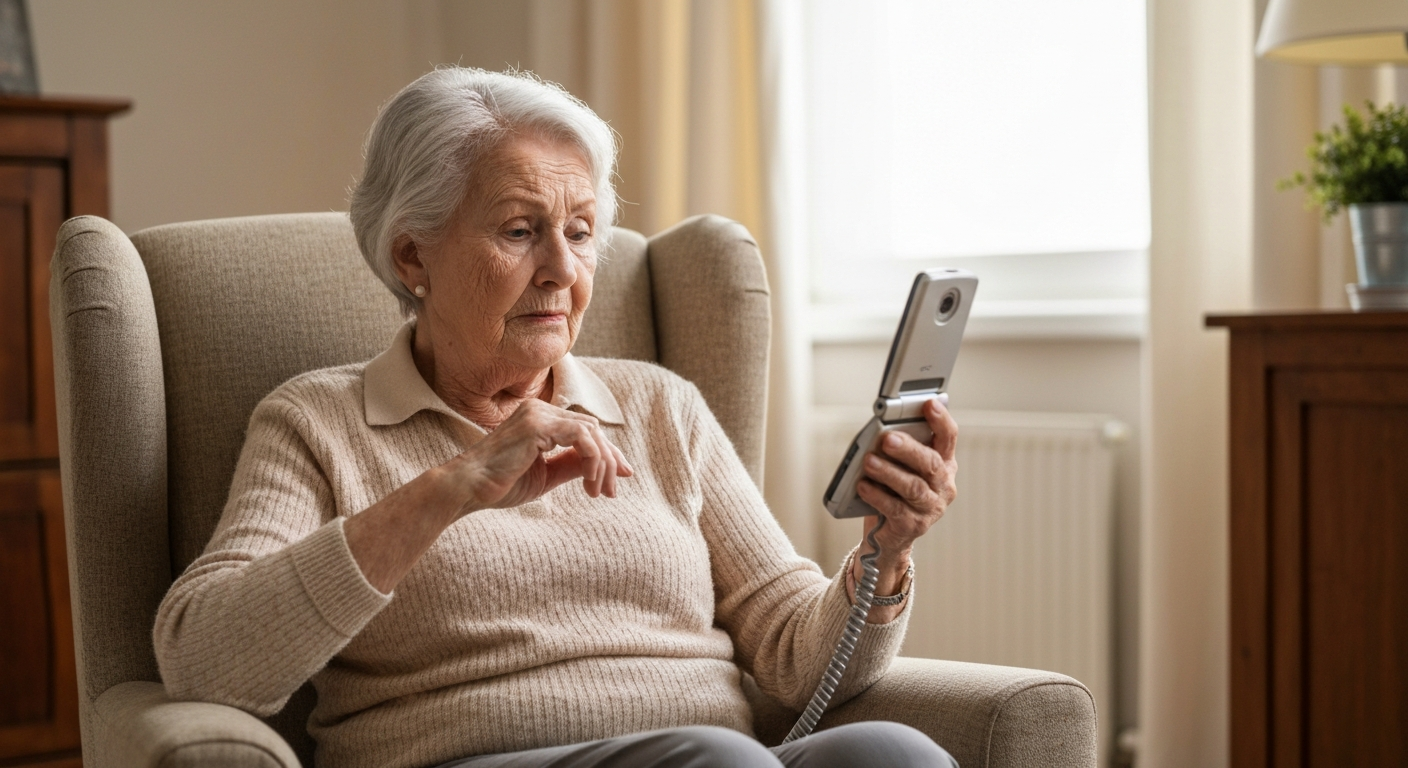
Phones get most of the attention in 3G shutdown coverage, but a surprising range of other devices quietly relied on the same 3G networks: medical alert systems, home security systems, car emergency-assist systems, and some older tablets and GPS trackers. Many of these devices don't have an obvious display telling you their connection type the way a phone does, which means they can stop working without any clear warning sign beyond simply no longer functioning.
This is a particular concern for medical alert pendants and fall-detection devices used by older adults, since these are exactly the situations where a non-functioning emergency connection matters most. If you or a family member uses any device that connects wirelessly but isn't a smartphone — a car's built-in emergency calling system, a home security panel, a medical alert button — it's worth confirming with the manufacturer or service provider whether it depends on 3G connectivity that may no longer function.
What to Do If You Suspect Your Device Is 3G-Only
If you have an older device and aren't sure whether it's affected:
- Check your carrier's device compatibility list — all three major carriers published lists of affected devices ahead of their shutdowns
- Test basic functions — if calls, texts, or data aren't working at all (not just slow), that's a strong sign of a 3G-only device on a now-shutdown network
- Consider device age — phones manufactured before roughly 2012-2015 are the most likely candidates, along with some older medical alert devices, car systems, and security systems that relied on 3G connectivity
A weak-signal area can still hurt overall data performance even on a modern 4G/5G device, in which case a dedicated signal booster addresses the actual cause directly:
| ✓Our Pick |
A signal booster for home use in weak-coverage areas Trusted by professionals and everyday users alike — a smart investment that pays for itself. See on Amazon → |
In Short
3G internet topped out around 1-8 Mbps in real-world use, but the more urgent question today is why you'd see it at all — every major US carrier shut down 3G entirely by the end of 2022. If a modern smartphone occasionally displays a 3G indicator, that's almost always a weak-signal fallback quirk, not an actual 3G connection. If an older device genuinely can't connect at all, including for emergency calls, it's likely a 3G-only device on a network that no longer exists.
What You Also May Want To Know
How fast was 3G internet?
3G offered peak speeds up to around 8 Mbps, with real-world averages typically lower, often 1-3 Mbps. That was enough for browsing and standard-definition video, but far short of what 4G or 5G deliver today.
Is 3G still available in the US?
No, not from the major national carriers. AT&T, T-Mobile, and Verizon all completed their 3G network shutdowns by the end of 2022. Some smaller regional carriers or specific legacy systems may still use older infrastructure.
Why does my phone sometimes show 3G or E?
On a modern device, this is almost always a fallback display quirk tied to a weak or congested 4G/5G signal, not an actual connection to a 3G network, since major carriers no longer operate one.
What happens to old 3G-only phones now?
They generally can't make or receive calls or texts, including to 911, and can't use data service on the major carriers' networks, since the 3G network they relied on has been shut down entirely.
Should I upgrade my phone if it's old enough to be 3G-only?
Yes. If your device only supports 3G, it likely can't connect to any major US carrier's network at all anymore, which is a functionality issue, not just a speed one — upgrading is necessary, not optional, in that situation.
Reviewed and Updated on June 28, 2026 by Adelinda Manna